 02 8319 2266 from Australia
 416-628-3473 from Canada
 04 889 4515 from New Zealand
 646-757-1102 from the USA


 Davos to St. Moritz
You are here: Alpine Exploratory
> Walking guides
> The Davos to St. Moritz: Walking guide
The Davos to St. Moritz: Walking guide
Bare facts
The Davos to St. Moritz is a hiking trail created by Alpine Exploratory to link these two famous towns in Switzerland. It turns out that such a link can be made on foot in four days of walking, without undue difficulty, and with one night in a hut. It is 70km (43 miles) from Davos to St. Moritz.
The highest point reached on the whole Davos to St. Moritz route is the Sertig pass at 2,738m (8,983ft) which comes on Stage 2 of our hike.
Trekkers typically take 4 days to complete the hike, with a first night in Davos and a last night in St. Moritz, making a 5-night trip overall.
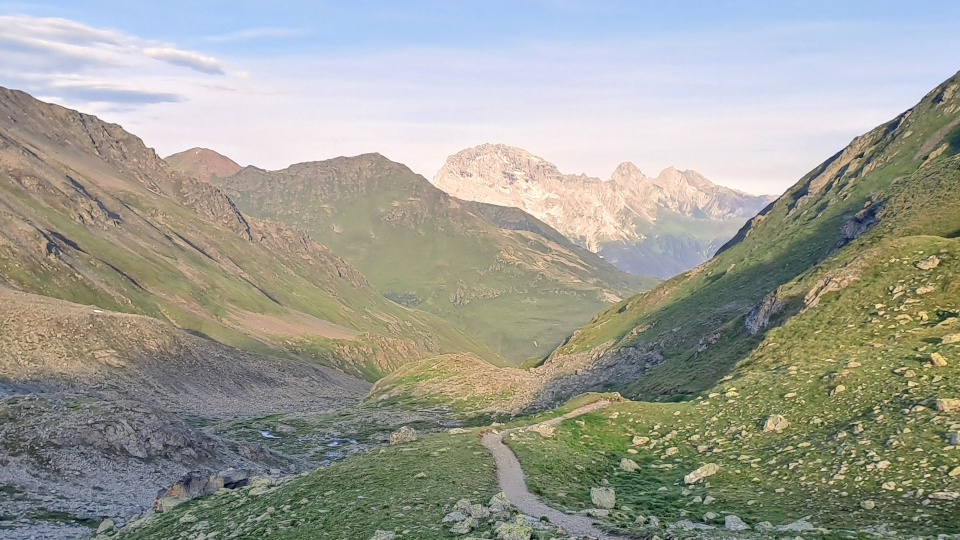
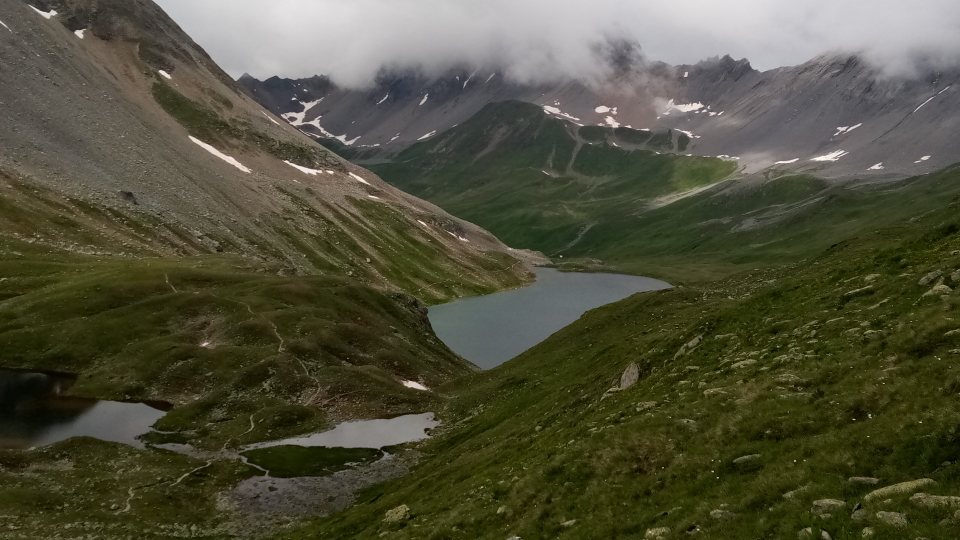
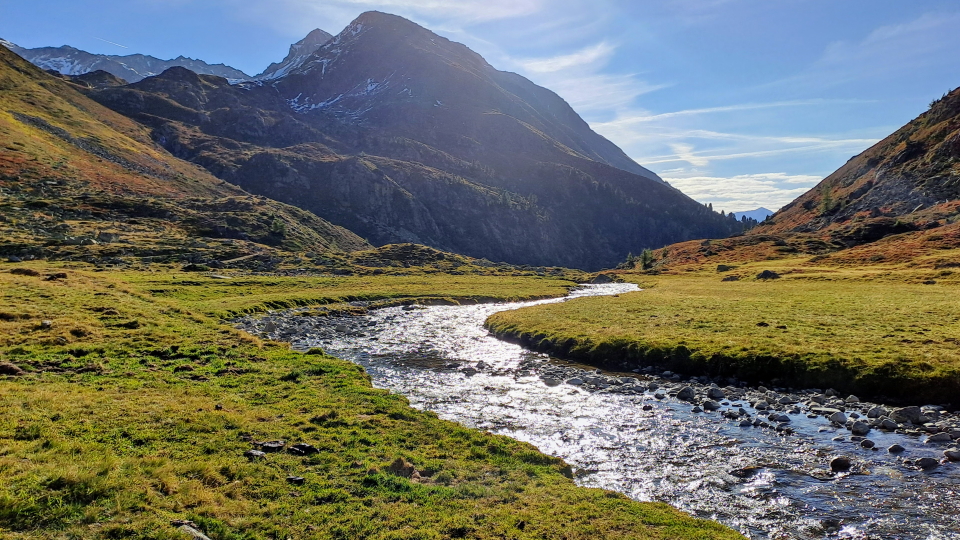
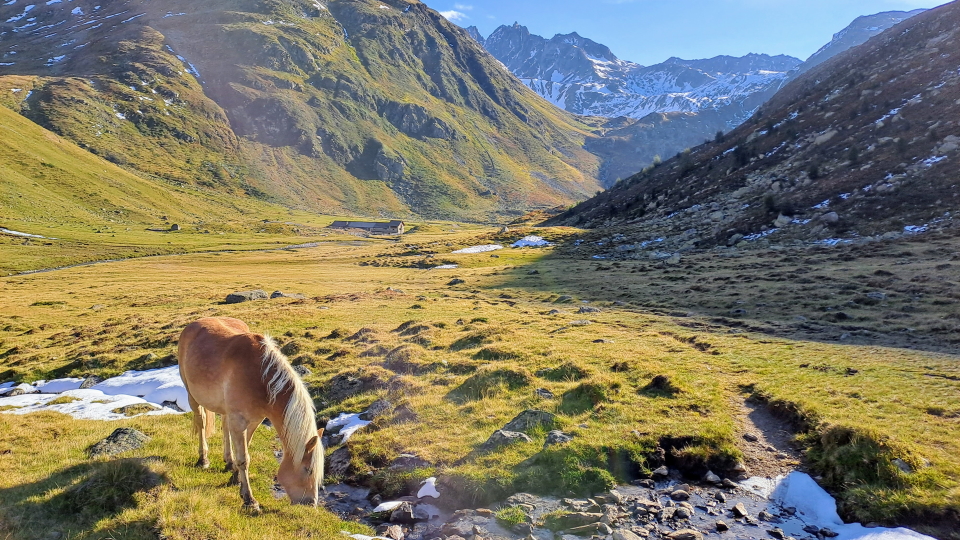
 Descending through the Salect valley

Best bits
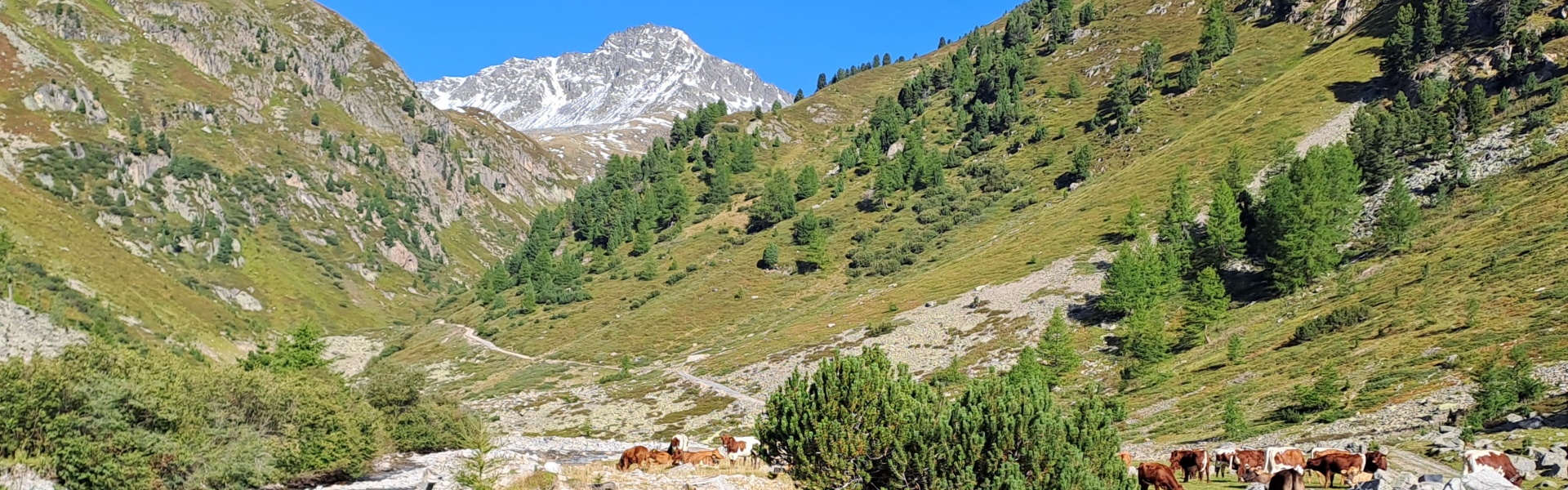
Perhaps the ascent to the Sertig pass and thereafter to the Kesch hut, are the most scenically fabulous bits of the Davos to St. Moritz route.
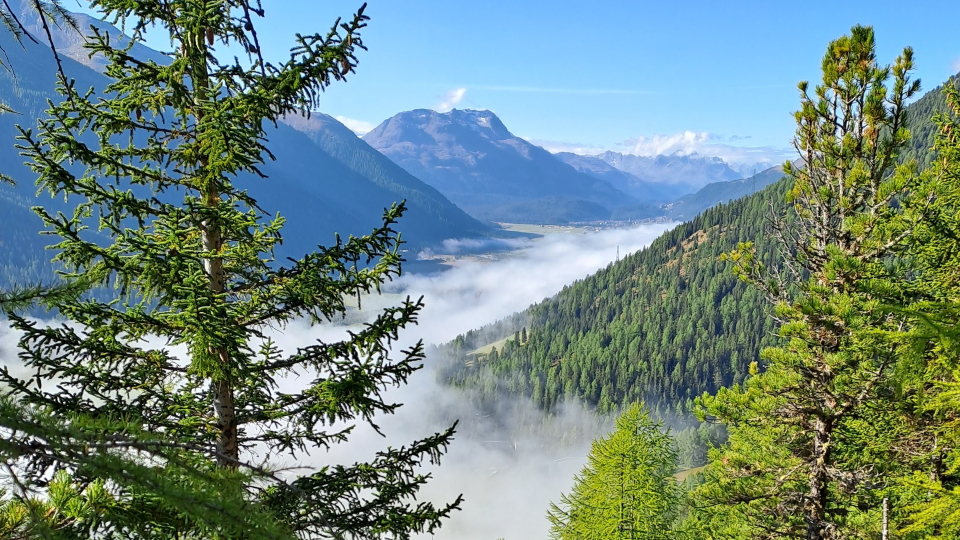
The long, slow, descent through the Val Funtauna on the third stage is a highlight.
Languages and names
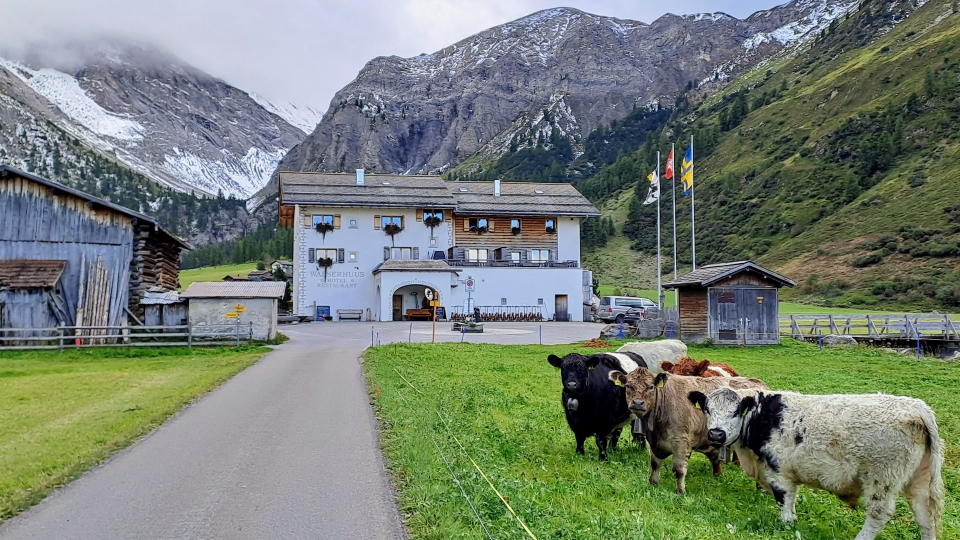
The Davos to St. Moritz trail exists entirely within German-speaking Switzerland. The popular towns of Davos and St. Moritz operate in a very international realm and are well-used to speaking English. The level of English in Switzerland in general, is exceptional. Commonly thoughout Switzerland, for example at railway stations, signs are in four languages: English, German, French and Italian.
We would say that French will get you nowhere here, but in fact it would do, so multi-lingual are the Swiss as a whole, and as compared to other nations. It might be fun to learn enough German to engage in pleasantries as you go along, but English would get you by just fine.
Grading
The Davos to St. Moritz is not an especially hard trail, being a Red grade within the Alpine Exploratory system. That is, roughly the medium of the grades that we offer. There are long days involved, on which the main event - after breakfast and before dinner - is walking, as in, walking all day. The walking is across mountains, in that there are mountain passes to cross on mountain paths.
The joy of long-distance trails
There is something fabulous about working through a long-distance (or only four-day) trail. It's a feeling that is not so common during daily life, which for many of us involves work and home and various things in between... but not walking a trail, making your way through and across the mountains, encountering a new place to stay each evening, and meeting new people throughout. It's a surprising, as in a quickly novel, lifestyle.
The lie of the land
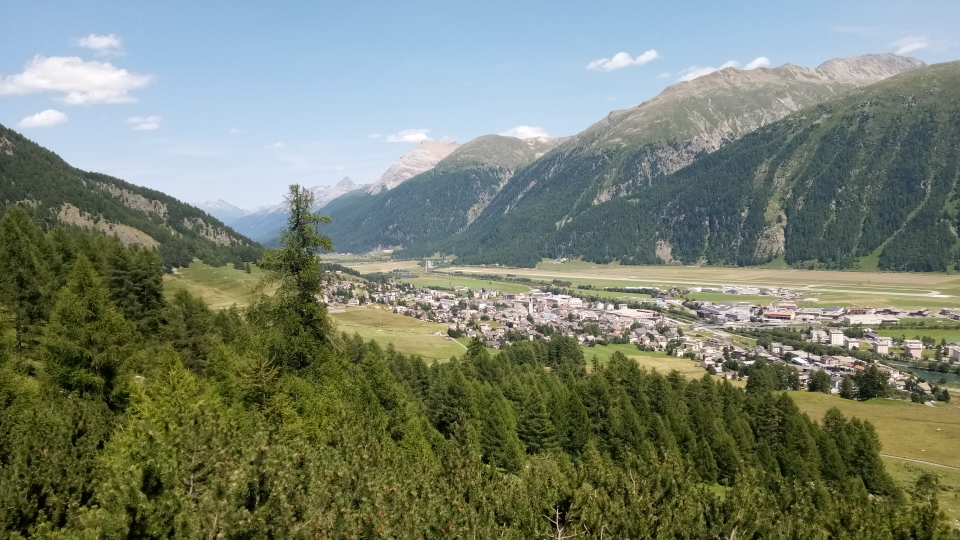
The Davos to St. Moritz area is a reasonably hilly one by Swiss standards. In between Davos and St. Moritz are substantial mountains, with routes through as per Alpine Exploratory's trip, while to the South end of these mountains is the Engadine valley - well-known in Switzerland.
The travel connections in this part of Switzerland are good, in that once in Bever, Samedan and St. Moritz itself, you are on the Bernina train line which runs Southwards to Tirano just inside Italy. The Bernina line is the Swiss train line with the viaducts-into-tunnels of many postcards. You will see many tourists who have come to St. Moritz simply to ride this train line.
Please see our page about Travel in Switzerland for full details, and please ask us for any help and any suggestions for your trip. The Davos to St. Moritz as a shorter trip (4 stages) is ideal for making part of a longer Swiss exploration.
Can I manage it?
The Davos to St. Moritz is simply a walk or a hike, and does not involve any climb or any via ferrata. Walkers should be fit, and capable of steady mountain walking on successive days. We are glad to point people to how and where to train for their trip, and we realise that some people's home areas are less mountainous than others. With booking in advance, most things become possible, and we will help you with ideas as you prepare.
What's it like underfoot?
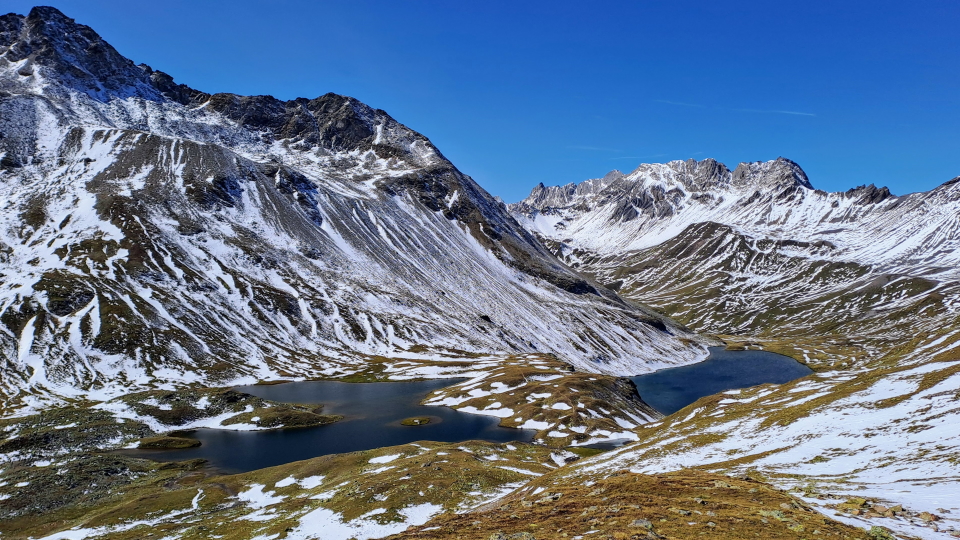
Underfoot in the Davos and St. Moritz areas, really the whole of the Swiss Graubünden canton, we find mud or hard-pack trails that remind us of elsewhere in the Alps. They are normal rough mountain paths.
Is it technically difficult?
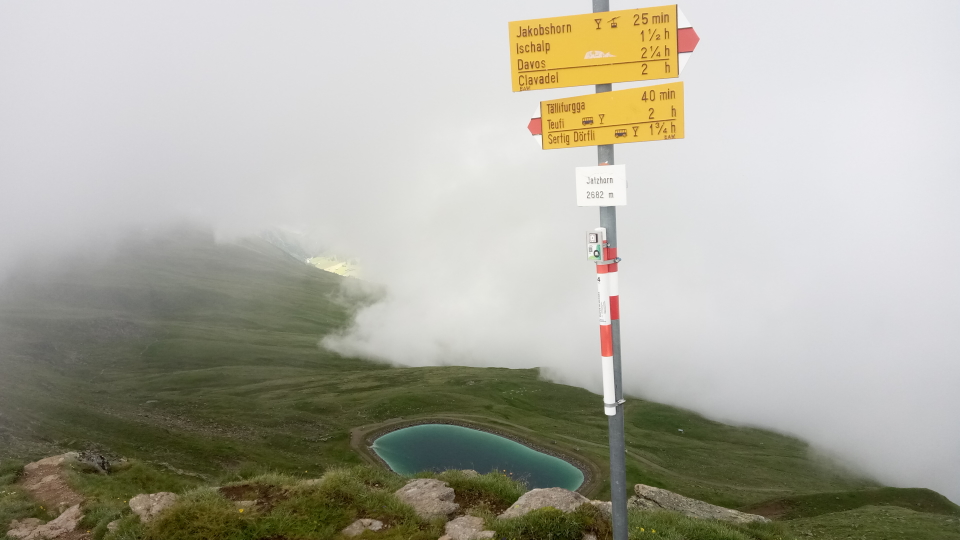
Our Davos to St. Moritz is a route of Alpine Exploratory's creation. We looked for a walking route that linked Davos and St. Moritz and we found this one, that involves no ground other than normal walking ground, and that pleasingly that does not involve unreasonable detours from the route as the crow flies. There are no climbing bits and there are no via ferrata bits.
As with most mountain landscapes, there are setions of our path that will be more challenging to some hikers than to others. Some terrain is more straightforward than others, some routes on a track, some on a path and others on rockier, steeper, mountain paths. These are full days of mountain walking for which fitness and balance - really, recent experience of the mountains - is necessary.
Are the routes obvious?
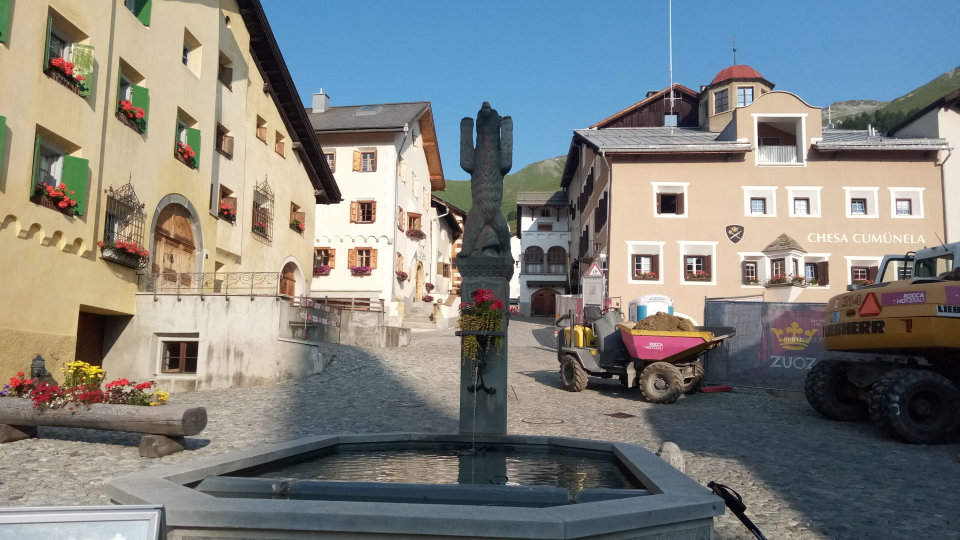
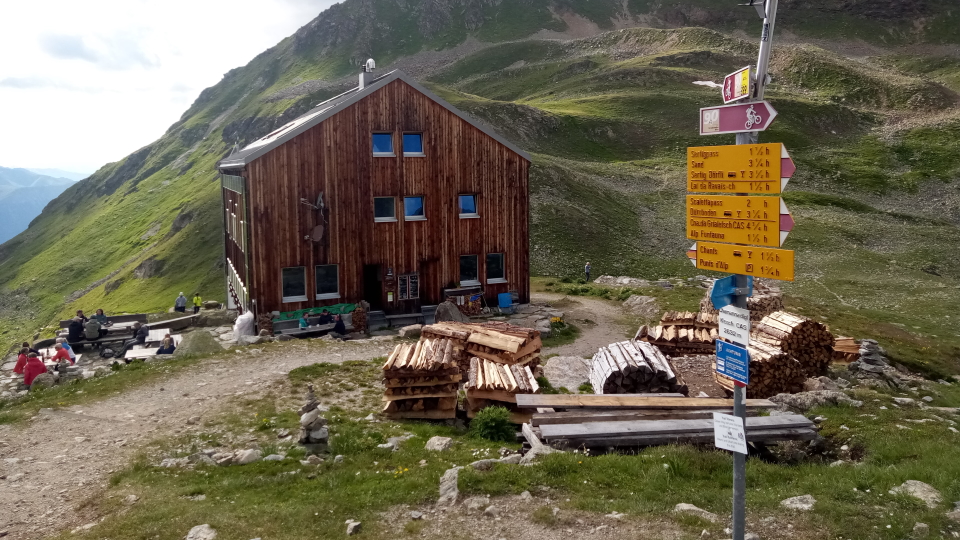
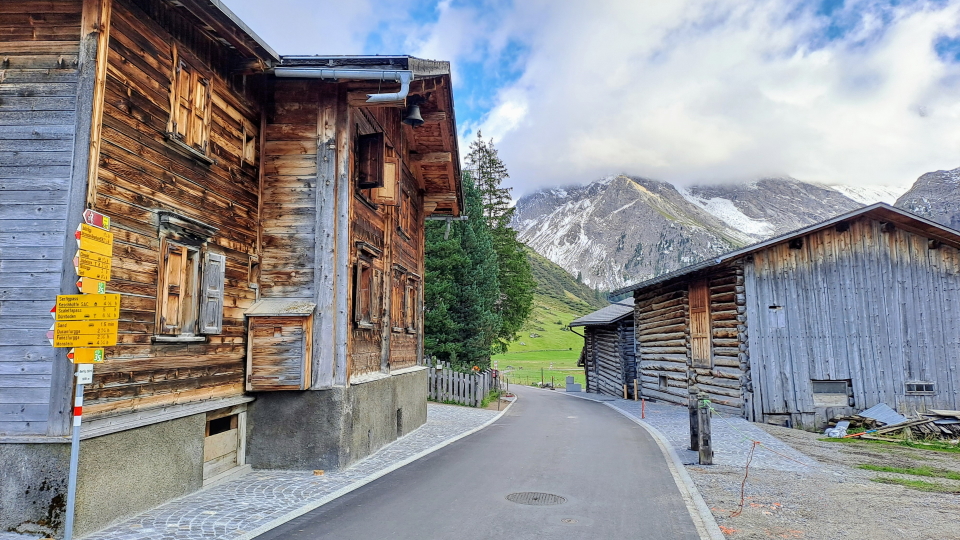
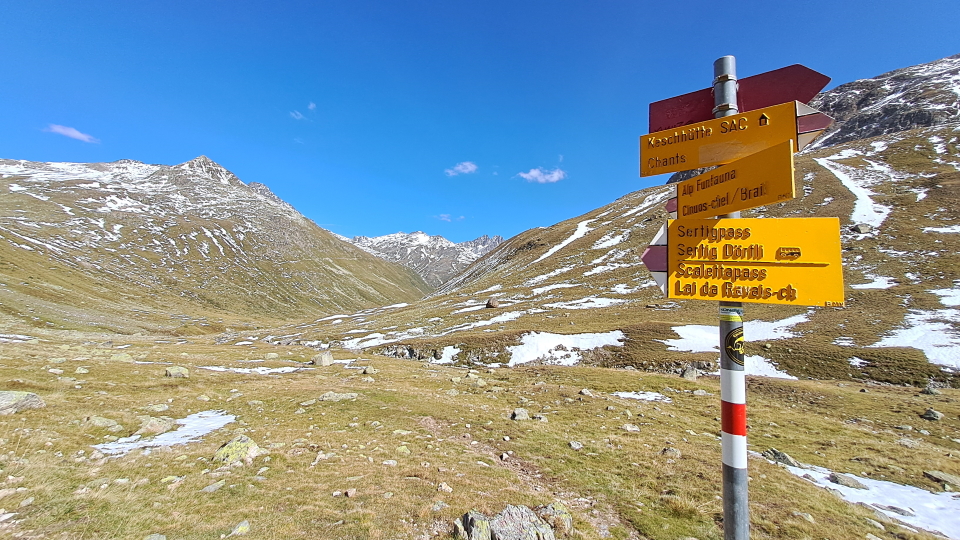
The Swiss signposts are very helpful, as can be seen from our photos. Throughout the Davos to St. Moritz route, the signposts and the yellow (or red-white-red) waymarks, can be relied on. At Alpine Exploratory we are big Swiss fans and we regard Swiss signposting as among the best going.
Unseasonal weather
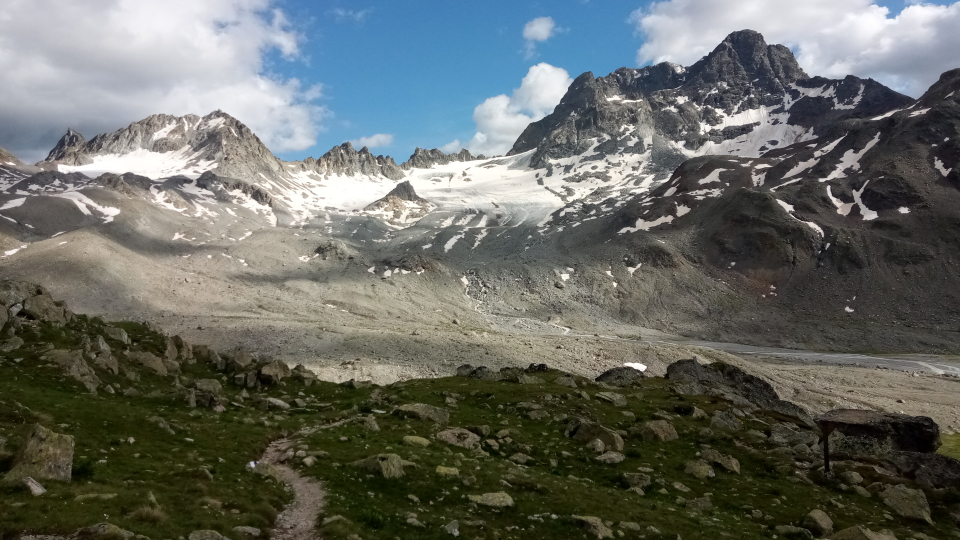
The Davos to St. Moritz route, like all areas of the Alps, can experience snow in the Summer months. If snow falls during the Alpine Summer, it is light and it is quickly over. Typically we get an inch or two, typically lasting a day or two... if that. It is next-to-impossible to plan for such events; they can be seen as atmospheric, and quickly over.
When to go?
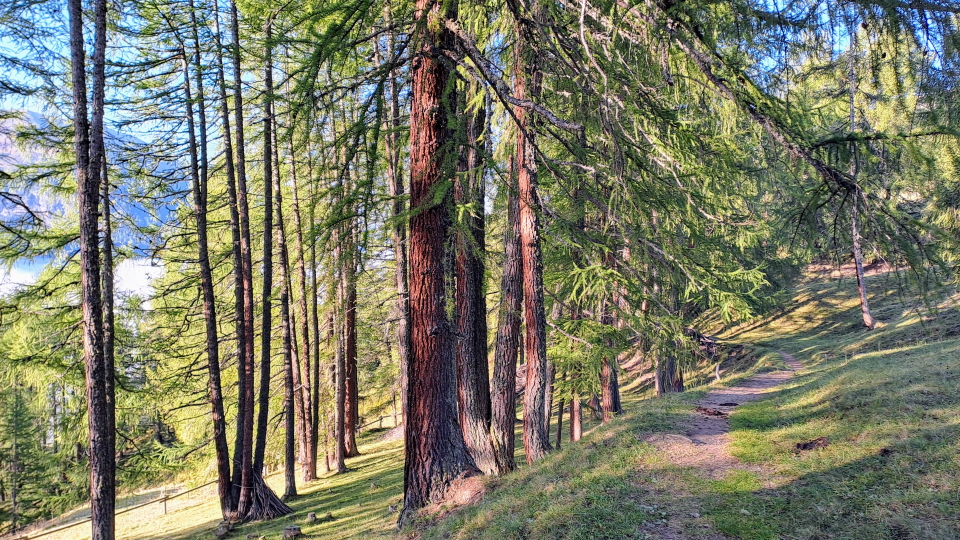
Our Davos to St. Moritz season runs from mid-July to mid-September. This is broadly our standard season in the Alps, which we set conservatively in order to avoid the worst of the pre-Summer snows in June and possibly early July, and to avoid the onset of Autumnal conditions (wind, rain and chilliness) in late September. Autumn days can be wonderful, sometimes crisp and colourful in the Alps, but are harder to plan for in advance.
Where to stay
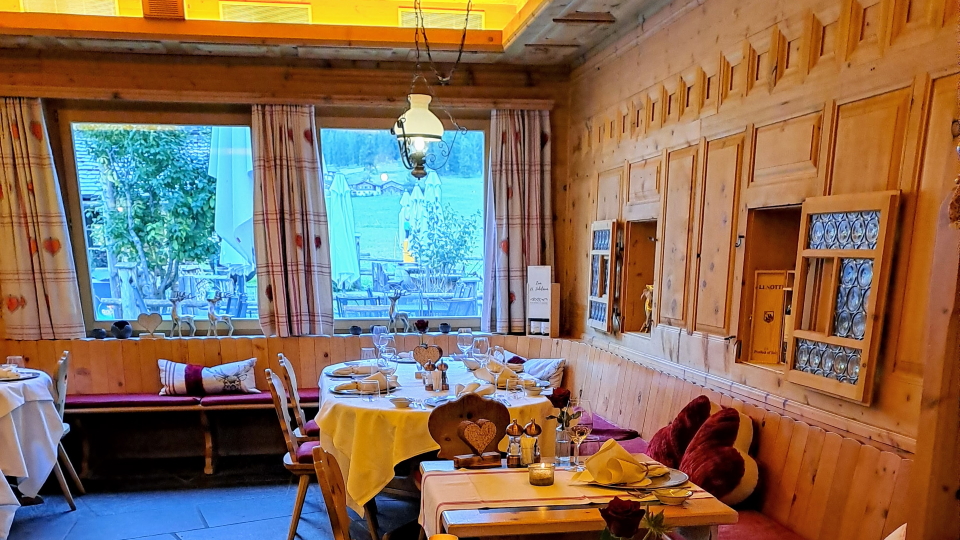
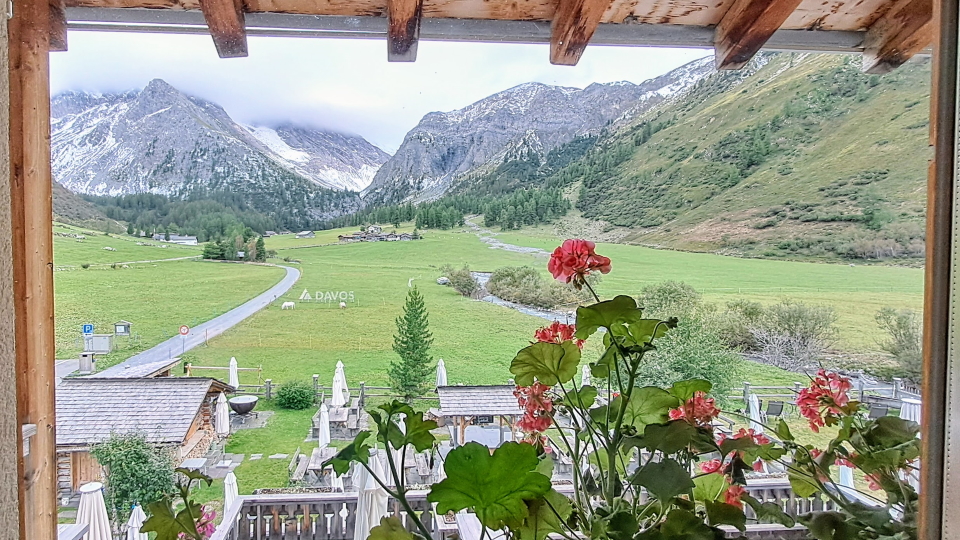
The four hotel nights on our normal Davos to St. Moritz are in good hotels, with one - at Sertig or Sand - being a charming, comfortable, place in these smaller villages.
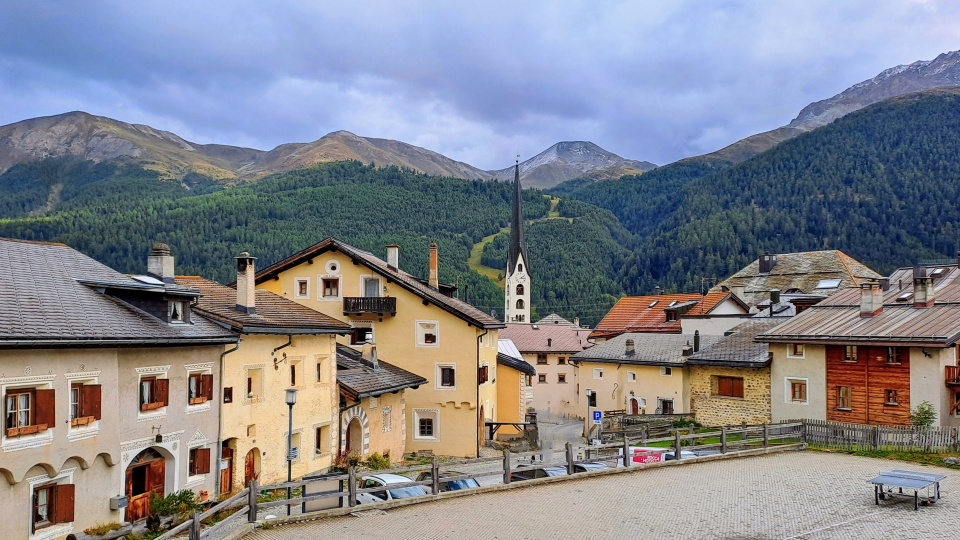
In Davos there is ample choice in this town that caters annually, and famously, for a huge influx. In St. Moritz the hotels are also plentiful and good, because St. Moritz is a well-known resort within Switzerland, not just for the Winter, and also serves as the main place to stay for the famous Bernina train line. In Zuoz in between the two, the village of Zuoz is smaller but is established within Swiss tourism as one of the places to look at, with a historic centre and with some painted buildings.
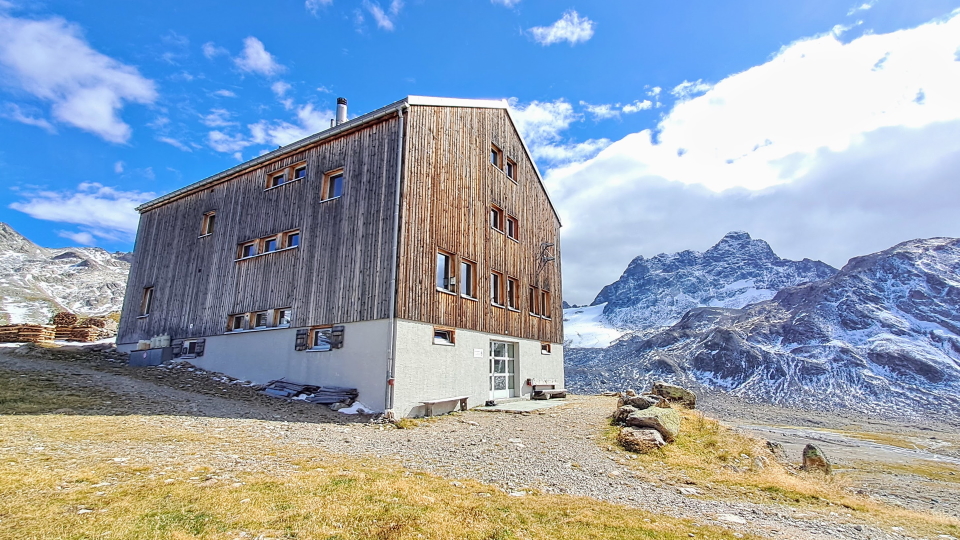
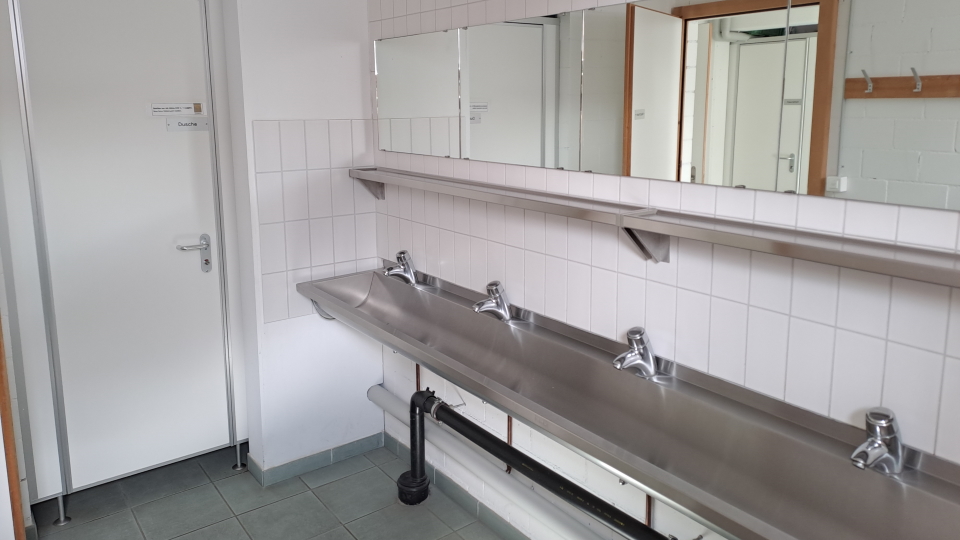
The Kesch Hütte is a good example of a neat Swiss hut, a decent introduction to the concept. We are always glad to explain more about this hut, about any of the huts on any Alpine Exploratory route, or indeed about huts in general - about huts as an idea, about huts as a challenge and an opportunity, and about huts as a necessity and a practicality on a hiking route.
Please ask us if you prefer to stay in smarter - perhaps the smartest - hotels, or if you might like to explore to the side of the Davos to St. Moritz route to those villages which are easily reached by train or bus. Alpine Exploratory is experienced in combining hotels and trains across country, within Switzerland, within the Alps, and further afield.
City breaks after trekking
Our Davos to St. Moritz holidays come with notes on the following cities, in your info pack:
 Zurich in Switzerland
Geneva in Switzerland
Basel in Switzerland
 City breaks after hiking in the Alps
The Davos to St. Moritz: Our route
Here we explain our route each day.
Stage 1: Davos to Sand
(5.6km and 1,130m ascent)
As we leave Davos at Davos Platz (the main part of town) with the Jakobshorn high above, we climb steadily - and the Jakobshorn cable car can be helpful here. At the Jakobshorn we can progress on the tops to the Jatzhorn and the Witihüreli, or walk along a lower path, before dropping down to Sertig-Dörfli and Sand in the valley.
Stage 2: Sand to Kesch Hütte
(12.6km and 1,120m ascent)
Setting off solidly into the mountains now, the Sertig Pass is our main challenge on the way; the Kesch hut keeps us going. At the pass we see Piz Kesch (3,418m) ahead among other fabulous mountain scenery. On the approach to the Kesch hut we pass the Val Funtauna which we will walk through tomorrow.
Stage 3: Kesch Hütte to Zuoz
(20.3km and 390m ascent)
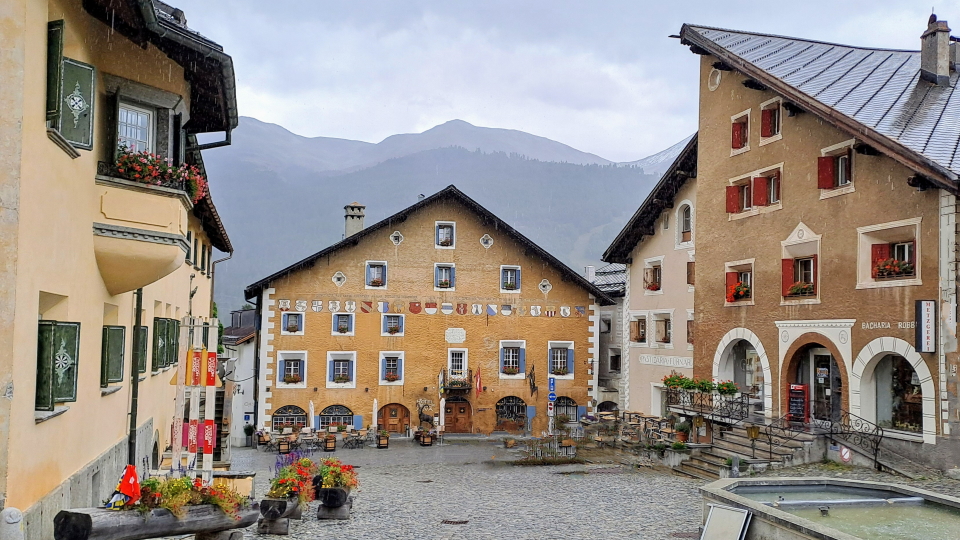
Mostly a day of descent, we walk the length of Val Funtauna with its splendid views, and emerge in the Engadine valley proper. There we make the final walk into the historic and noteworthy Swiss town of Zuoz, following the slopes of the valley.
Stage 4: Zuoz to St. Moritz
(20.8km and 850m ascent)
It's a rolling day today, with the village of Bever half-way and the village of Celerina nearer the St. Moritz end. In between Bever and Celerina we pass high above the railway town and railway junction of Samedan.
Hike the Davos to St. Moritz with Alpine Exploratory
Alpine Exploratory offers one self-guided option on the Davos to St. Moritz. We're also pleased to book shorter or longer sub-sections of the route according to your available dates. Please contact us to discuss options.
Our self-guided holidays give you what you need to complete the route under your own steam. We book your accommodation in a mix of huts and hotels and we give you our detailed Routecards, the local maps, and lots of notes. Importantly we will advise on the ideal schedule and accommodation to suit your approach to the Davos to St. Moritz.
Please ask us any time for more details. Please feel free to describe your walking experience and preferences, and we'll suggest which trek you might enjoy most.
  Davos to St. Moritz enquiry form
|



 Alpine Exploratory


