 02 8319 2266 from Australia
 416-628-3473 from Canada
 04 889 4515 from New Zealand
 646-757-1102 from the USA


 Jura Crest Trail
You are here: Alpine Exploratory
> Walking guide
> The Jura Crest Trail: Walking guide
The Jura Crest Trail: Walking guide
Bare facts
The Jura Crest Trail is a hiking trail through the Jura mountains of Switzerland, for 310km (193 miles) from Dieldsorf (near Zurich) in the East to Nyon (near Geneva) in the West.
The Swiss Jura Crest Trail, which is entirely within Switzerland, is distinct from the Grande Traversée du Jura (GTJ) which is also in the Jura but which is entirely within France.
Alpine Exploratory offers all of the Jura Crest Trail trail, from Dielsdorf to Nyon, and our standard trip is 16 stages of walking. As well as the whole thing, we offer each half (East or West) in 8 stages. These halves are the Eastern half (Dielsdorf to Vue des Alpes) and the Western half (Vue des Alpes to Nyon).
The highest point reached on the whole Jura Crest Trail is Mont Tendre (1,679m or 5,509ft) which comes on Stage 14 of our hike of the whole JCT, the day from Le Pont to Col du Marchairuz. If doing just the Western half, this is your 6th stage.
Best bits
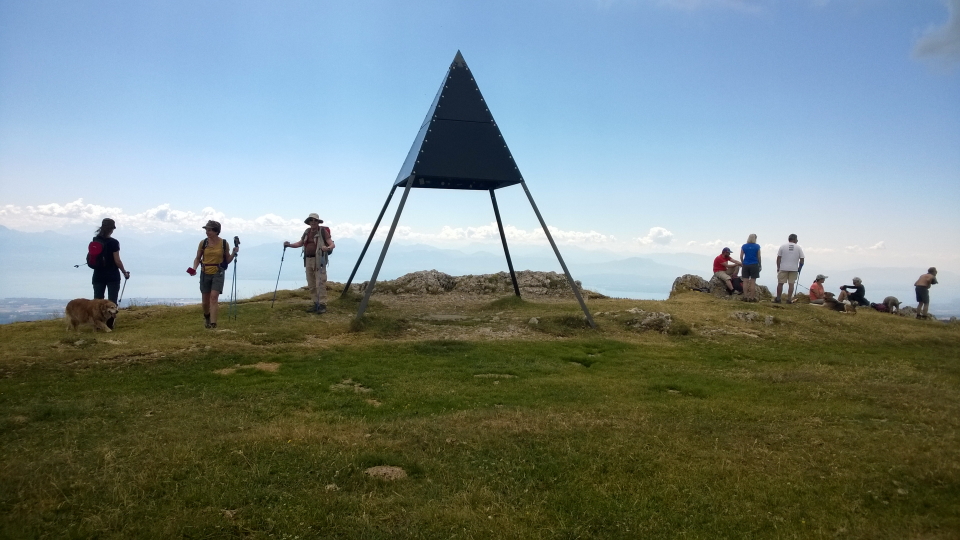
We love the modest hills of the Jura, which appear regularly as we walk West. The highest of these hills is of course Mont Tendre (1,679m), the highest point in the Jura. There are several more hills of note, in the 1,400s and higher, across the route. Summits are marked by conspicuous black metal triangles, forming a sort of shelter. These triangles are used as surveying structures.
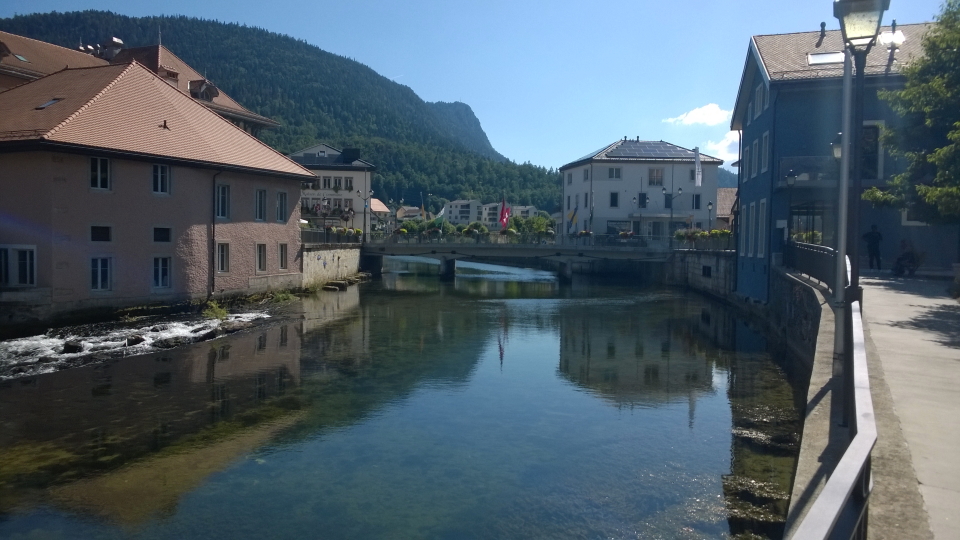
The proximity of the Jura Crest Trail to several interesting towns - towns of a decent size - is a benefit to the route. These are easily reached, often by a quick train... and in Switzerland the trains are such a pleasure. These towns include Baden, Aarau, Olten, Solothurn, Biel, Neuchâtel, and Yverdon-les-Bains. Some of these towns are even on the route.
Languages and names
The Jura Crest Trail is, in Swiss French, the Chemin des Crêtes du Jura, in German the Jura Höhenweg, and in English the Jura Crest Trail, the Jura High Route or the Jura Ridgeway. The route is the Swiss National Route 5.
In Eastern areas of the Jura Crest Trail, German is used locally, whereas in the Western sections it's French.
Grading
The Jura Crest Trail is not an especially hard trail, being a Blue grade within the Alpine Exploratory system. Days can be long in terms of miles, though compared to the main Alpine range on many of our other trips, the walking in the Jura is more steady, and less steep and jagged. Much of the walking is along solid, sometimes knobbly, paths.
A challenge of the Jura, at least as much as other walks at Alpine Exploratory, is the intense heat of the Swiss valleys and lower hillsides. Forested walking, even at modest altitudes, can be tough going in the heat of the day. It is easy to underestimate the challenges of walking so far across the Swiss countryside.
The Swiss Jura Crest Trail is a route for those hikers who are used to the walking and who are determined!
The joy of long-distance trails
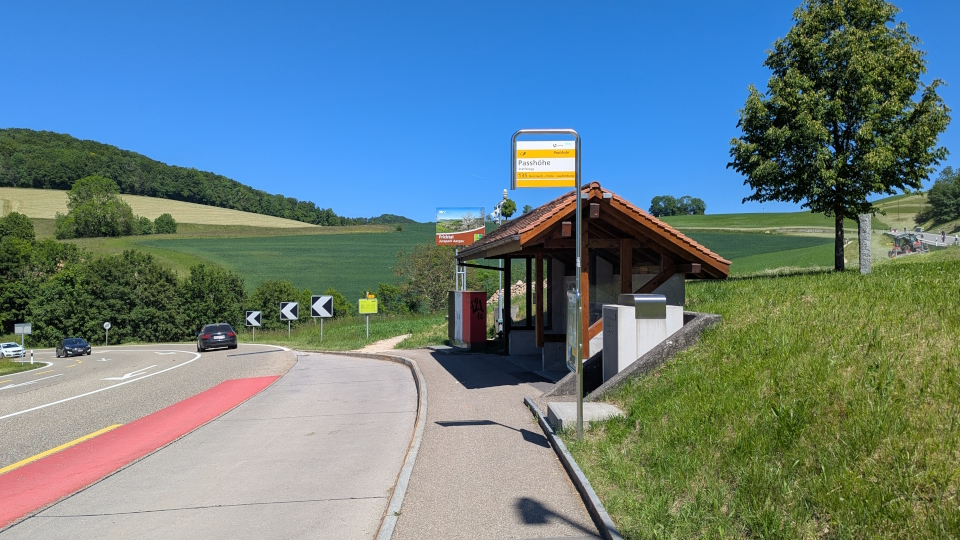
We like that particular feeling when on a long-distance trail, which can come after 100 metres or after 5 days... that of being at one with the trail, in that the current trail is your trail of choice and your one mission. This one mission excludes your normal pattern of work, family, surroundings and everything else. It is enormously relaxing and reinvigourating to have simply one thing to do: to walk ahead on your trail.
Then each evening you find yourself in a new village, a new town, and have the place to get to know... a new place, having reached it by a day's walking. Such satisfaction!
The lie of the land
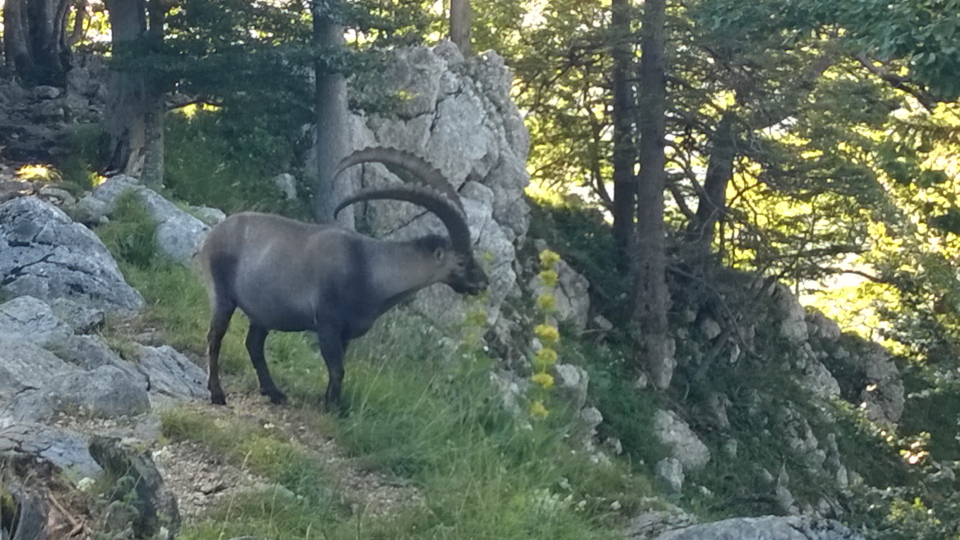
The Jura mountains stretch from outside Zurich in the centre-East of Switzerland, to outside Geneva in the West of Switzerland. The walking is hilly and challenging throughout, while the hills generally become higher as you proceed West, such that the higher half of the Jura Crest Trail is the Western half.
Views can be pastoral and rustic, without the immediate steep slopes of the Alps (which are in view off to the South) but with some delightfully pretty scenes... and, of course, always with the same Swiss way of life that we know so well from the Alps.
Can I manage it?
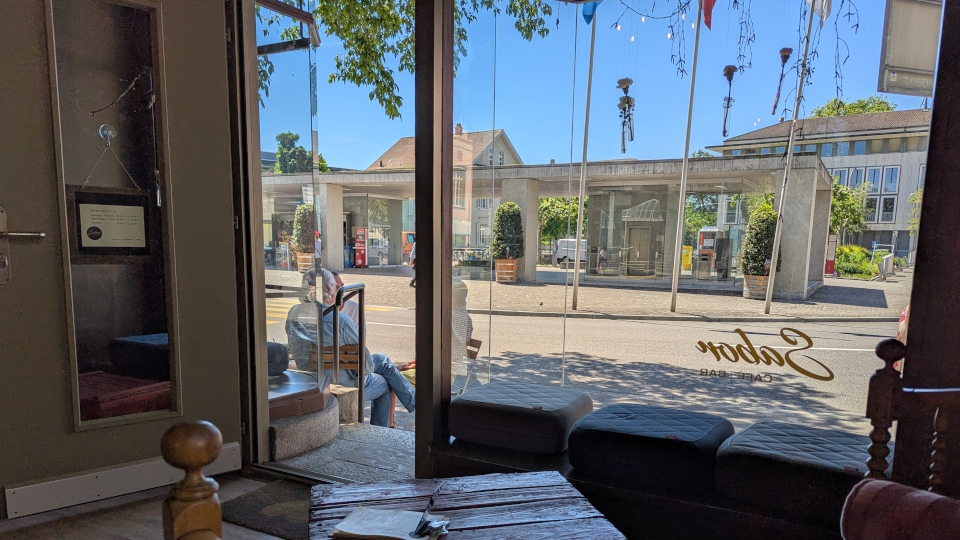
The Jura Crest Trail can be managed as simply a walk - not involving a climb or a via ferrata - for anyone fit and capable of steady mountain walking day after day. We always recommend people to start the trip with recent walking under their belt, such that the length of the stages will not be a surpise. We can advise on training before your trip - please just ask us.
We can book several variations of the Jura Crest Trail, using the spacing of the hotels and towns to give different stage lengths. These could be longer or shorter days, as you choose.
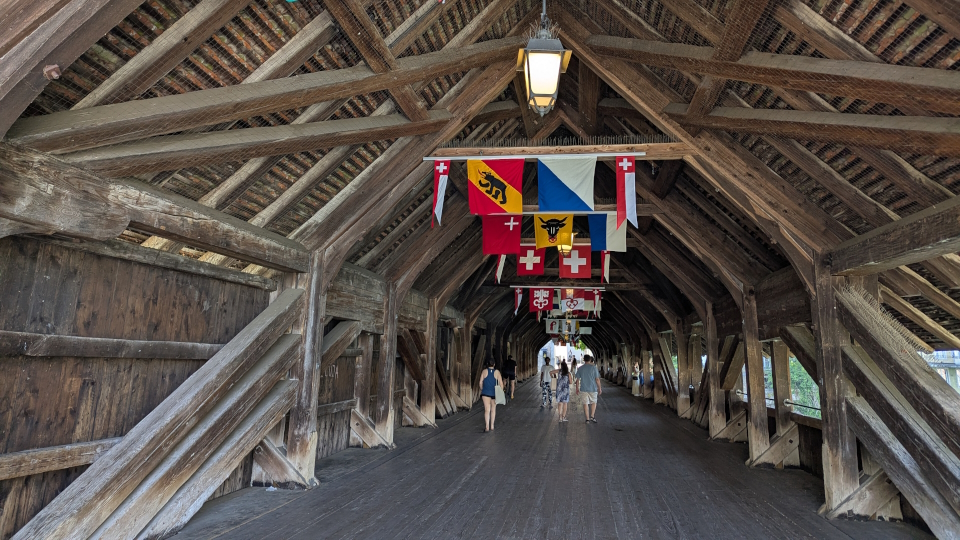
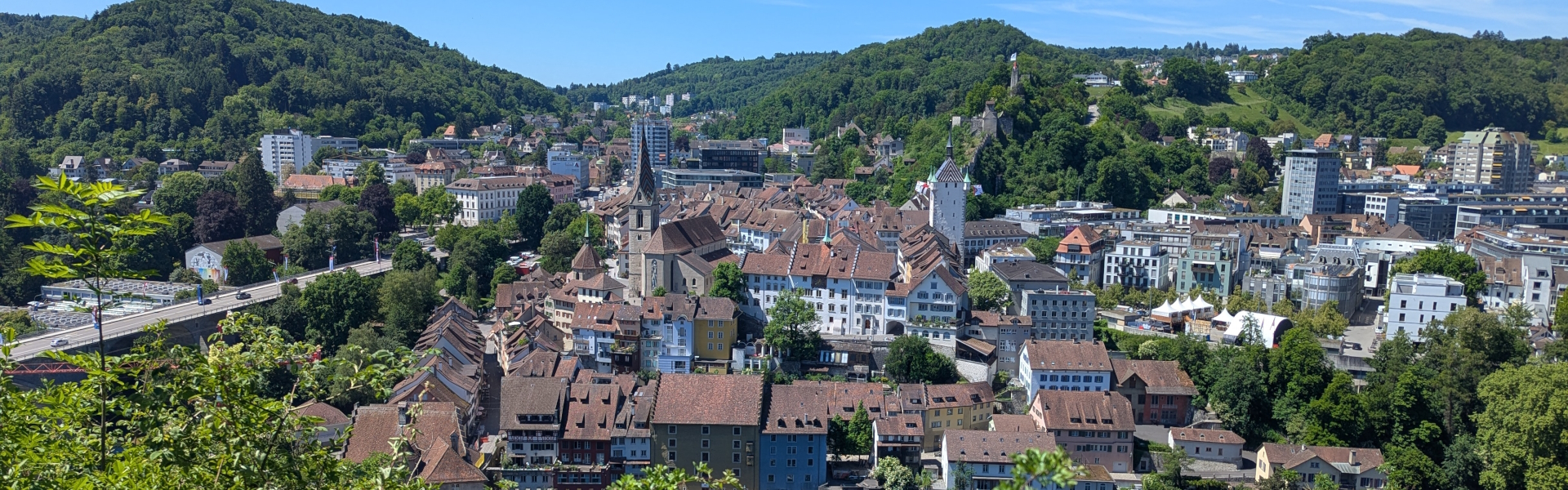
 The covered bridge with its flags (Swiss cantons) in the middle of Olten, Switzerland
 Jura Crest Trail
What's it like underfoot?
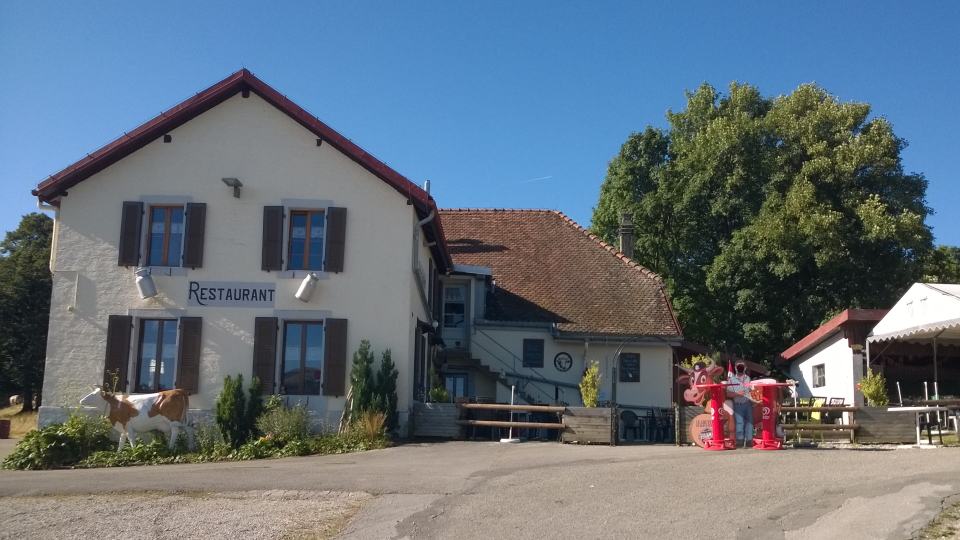
Underfoot in the Jura, we find the mud or hard-pack of trails found across the Alps and elsewhere, with some elements of rocks as are common in the hills. Generally the trails are well-worn. Some areas see more grass, such as across pastures or fields.
Is it technically difficult?
Our Jura Crest Trail follows the normal route as it is established, as the Swiss National Route 5.
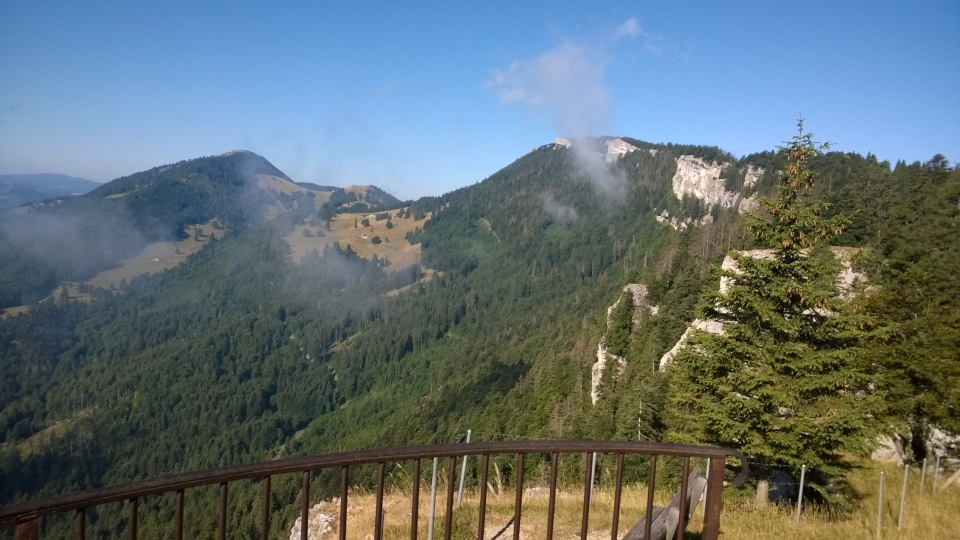
While generally a less challenging route, there are some sections where the path crosses rockier and steeper ground. Some stages cross open, unforgiving terrain without easy escape routes: full days of mountain walking. Of course too, the weather makes a big difference, and while less usual, those cold or wet days can be harder going.
Are the routes obvious?
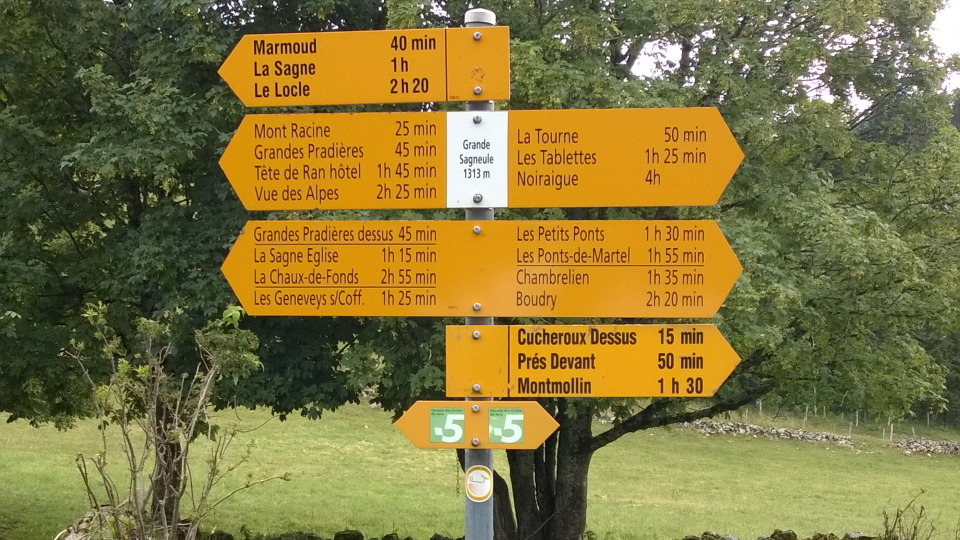
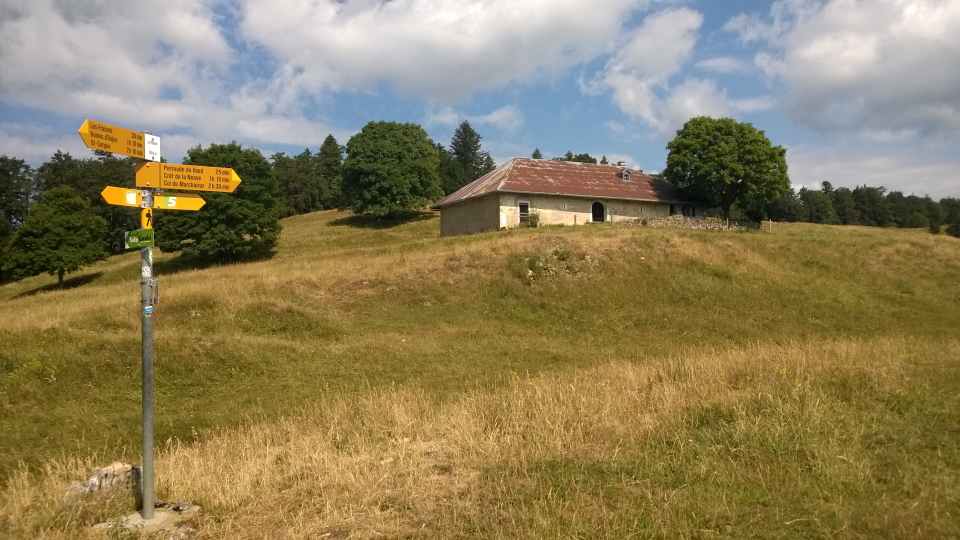
The Swiss signposts are very helpful, and throughout the Jura Crest Trail can be faily well relied on. On the ground, the trail is marked by the usual red-white-red boxes painted on boulders or walls.
Unseasonal weather
The Jura Crest Trail is a lower-lying trail than the higher routes in the Alps, and we would expect a snow-free Summer. It is always worth saying, however, that snow can occur in the Summer in such regions. If snow were to fall, it would be light and it would be quickly over - typically an inch or two and typically lasting a day or two.
When to go?
Our Jura Crest Trail season runs from June to mid-September. This longer season than most of our Alpine ones is afforded us by the weather: the earlier weeks in Summer are less prone to snow than the main Alps, because altitudes in the Jura are lower.
Where to stay
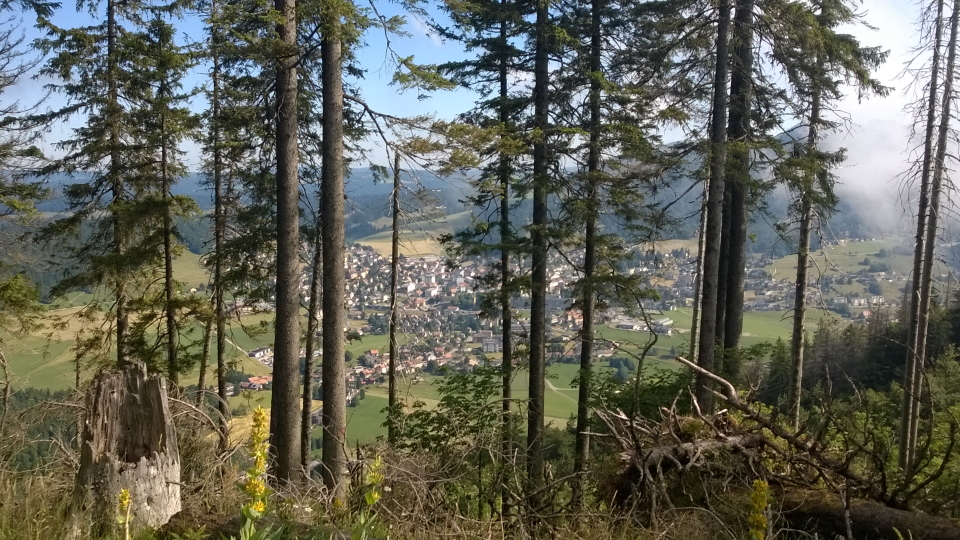
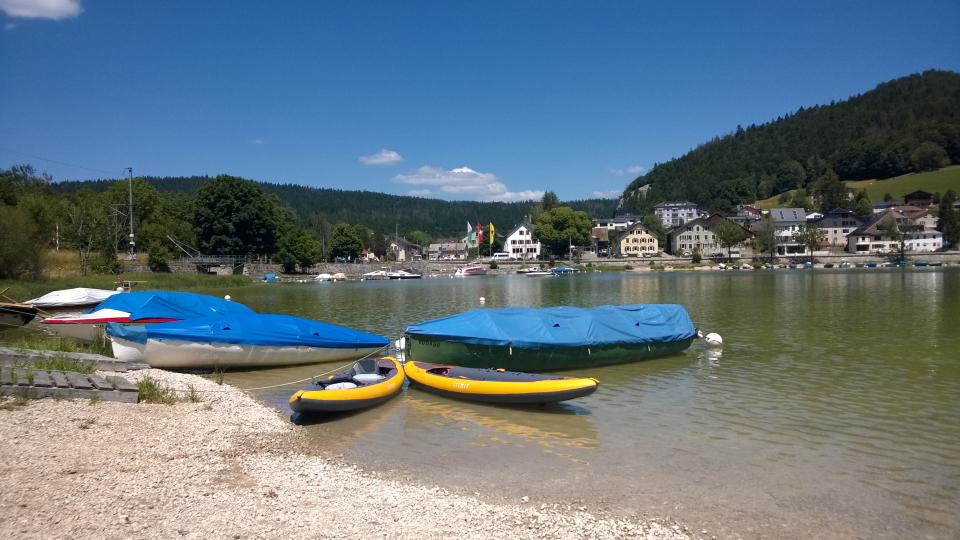
We find a lovely mix of hotels along the Jura Crest Trail. Generally, our Jura Crest Trail stays in simple, comfortable, decent Swiss hotels in the villages along the route, which tend to be smaller villages (in the hills) than those bigger towns lower down. We experience a quieter way of life! It is possible for us to book smarter hotels in the bigger towns if clients prefer this style, and we then advise on the travel off-route to the towns - on the great Swiss trains and buses.
City breaks after trekking
Our Jura Crest Trail holidays come with notes on the following cities, in your info pack:
 Zurich in Switzerland
Geneva in Switzerland
Basel in Switzerland
 City breaks after hiking in the Alps
The Jura Crest Trail: Our route
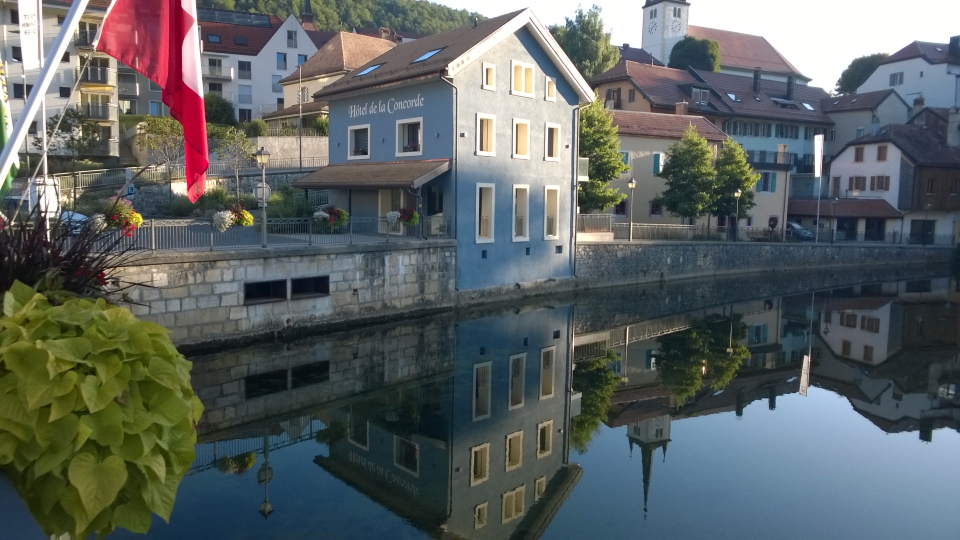
Here we explain our route each day.
Stage 1: Dielsdorf to Brugg
(24.3km and 789m ascent)
Leaving Dielsdorf we climb immediately, our first goal the well-defined ridge that links to Baden, a superb little town. We walk onwards to Brugg across a high plateau of forests.
Stage 2: Brugg to Staffeleggpass
(15.2km and 530m ascent)
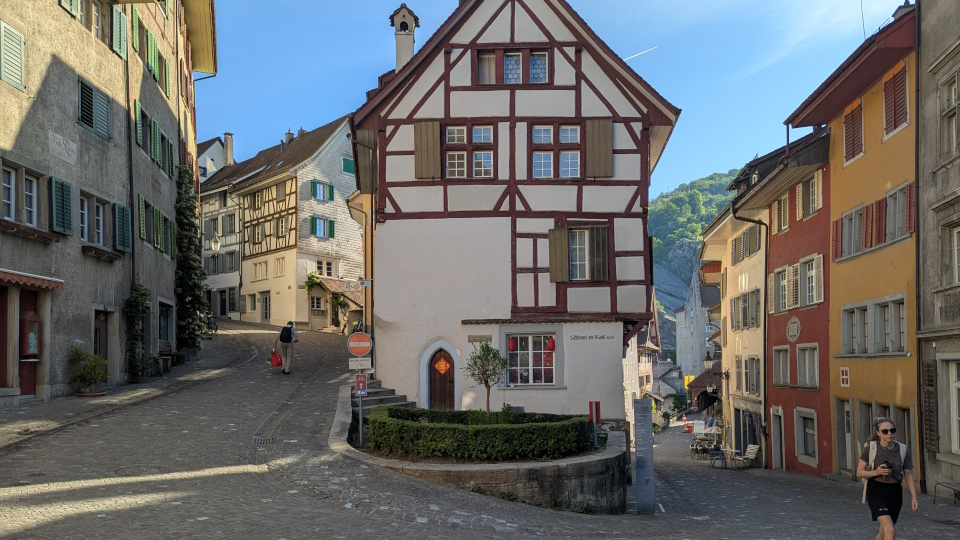
Today we escape the confines of the valley, though beautiful in historic Brugg, and gain the high fields and woods above Brugg and Aarau. At the Staffeleggpass we catch a bus down in to Aarau.
Stage 3: Staffeleggpass to Hauenstein
(19.8km and 819m ascent)
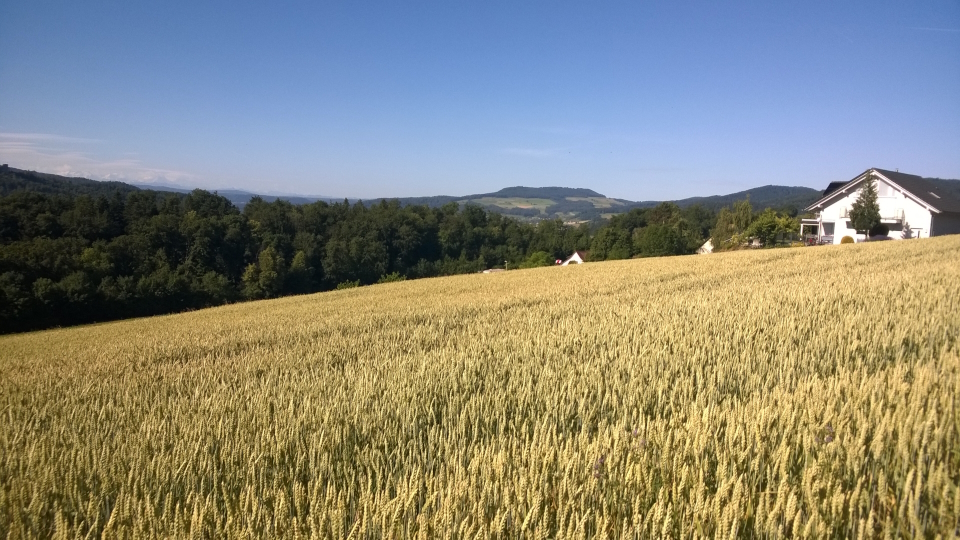
We walk along wooded ridges today, to link the Staffeleggpass with the Salhöhe and wlka behond, finishing our day with a bus off-route to Olten. Olten is a charming town with a covered bridge, and functions as an important railway junction for Switzerland.
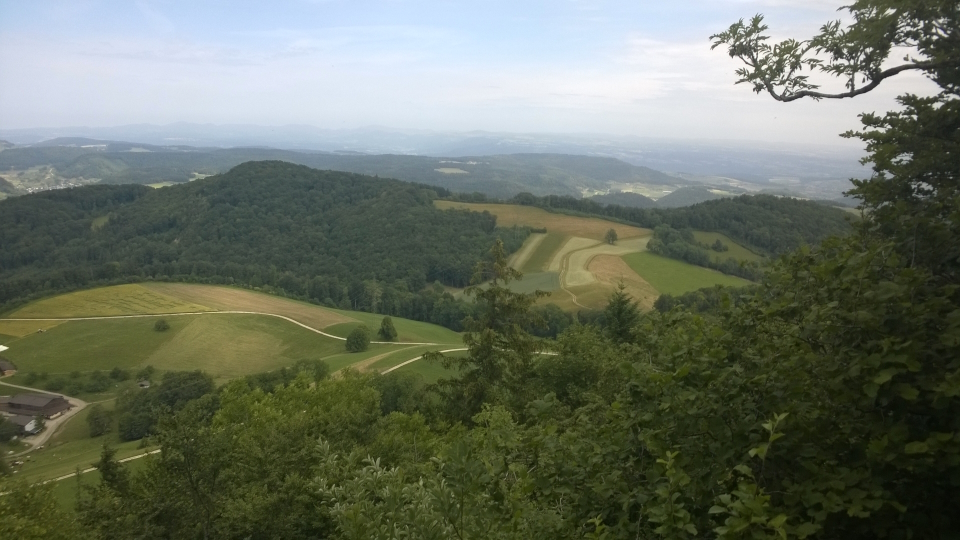
Stage 4: Hauenstein to Balsthal
(21.2km and 869m ascent)
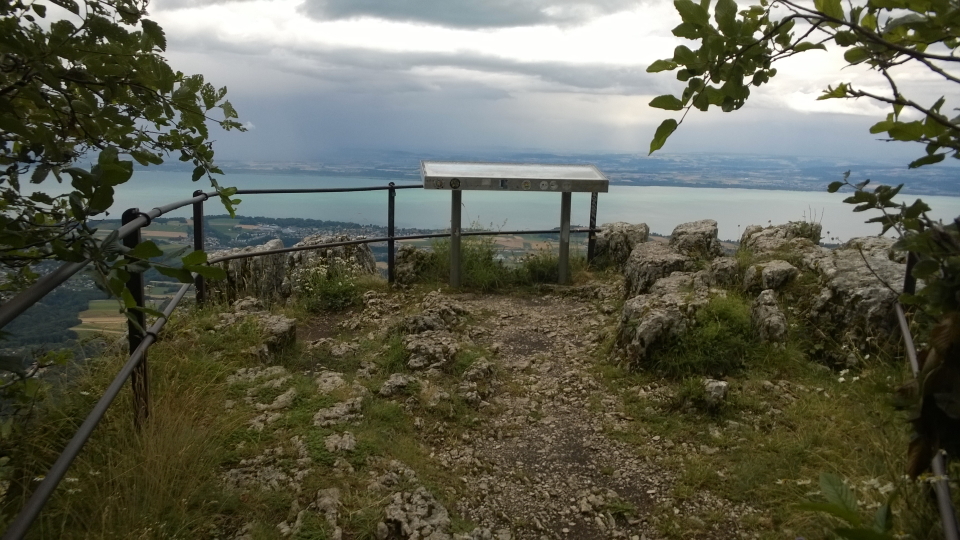
The JCT today is a steady ascent and walk along the wooded ridgeline to the summit of the Roggenflue. Here is a view and a signboard for the big peaks of the Alps. After the Roggenflue we drop across fields into the pleasant village of Balsthal.
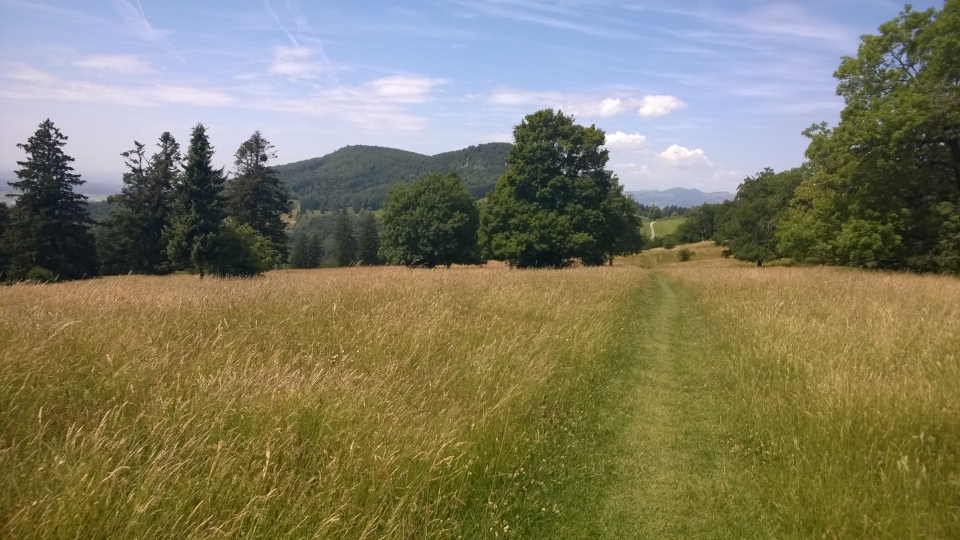
Stage 5: Balsthal to Weissenstein
(21.1km and 1,190m ascent)
Over the course of this stage we gain the substantial plateau of Weissenstein, dotted with trees and farms and high above the plain.
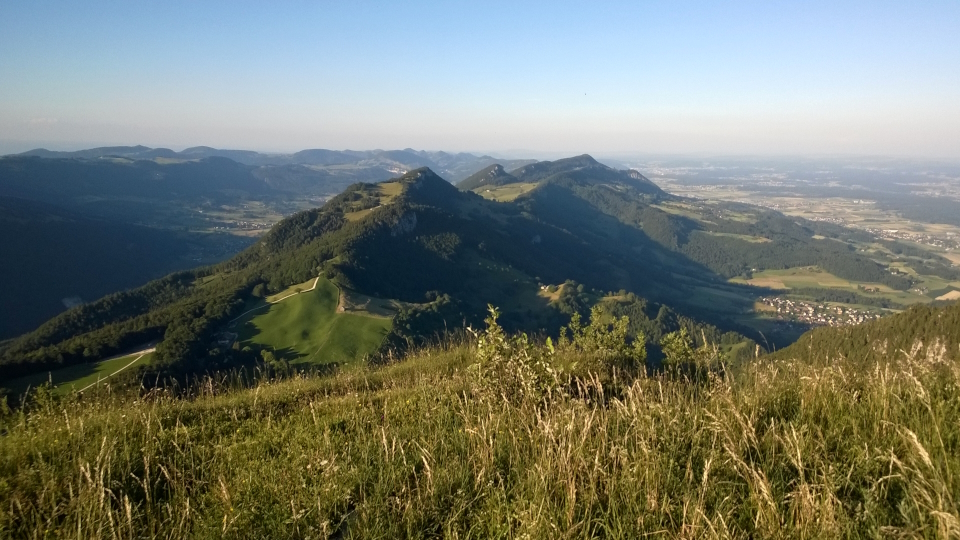
Stage 6: Weissenstein to Frinvillier
(24.1km and 675m ascent)
We climb through meadows and woods to the highest summit on the Weissenstein plateau, the Hasenmatt (1,445m). Afterwards, the day is one of descent, to the village of Frinvillier near Biel.
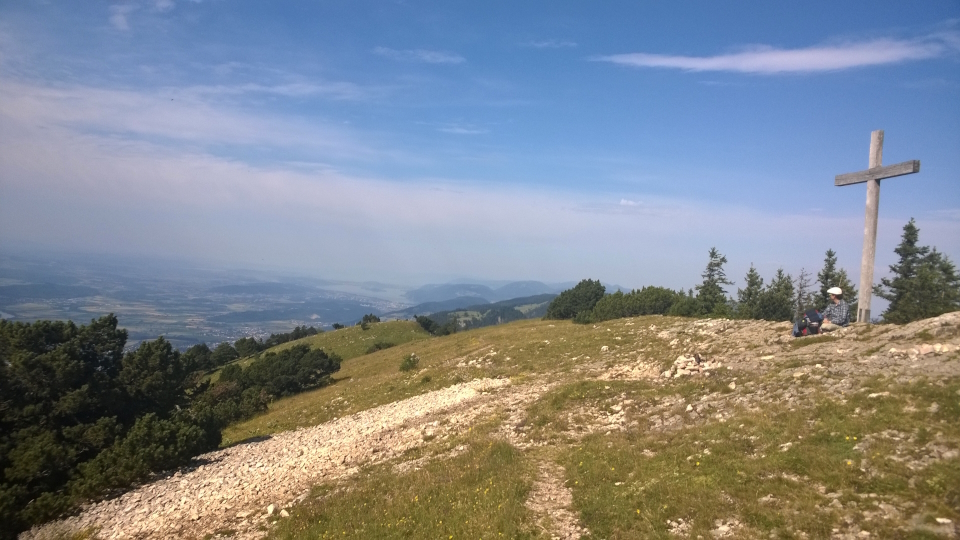
Stage 7: Frinvillier to Chasseral
(18.5km and 1,347m ascent)
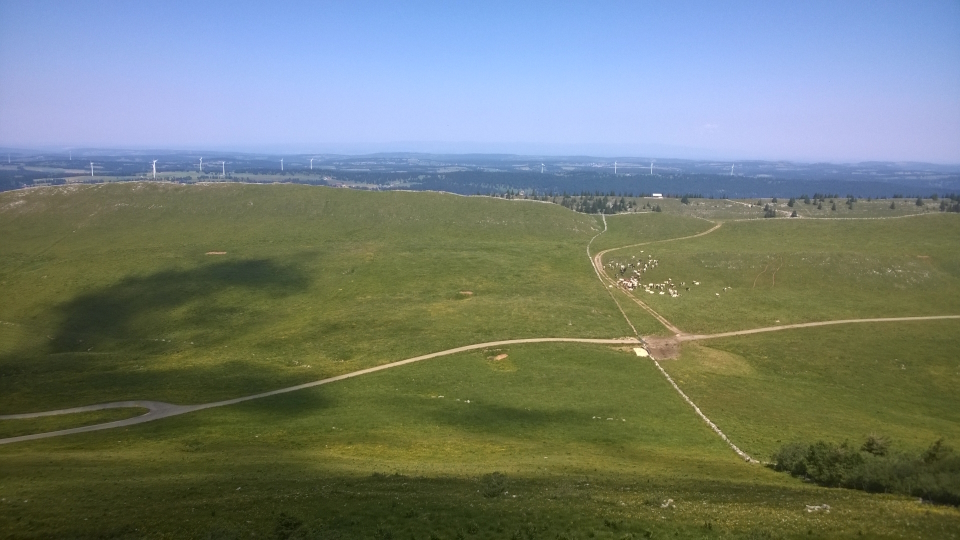
Today's goal is the high, exposed, yet grassy, ridge of Chasseral with its long views North and South. There is a lot of uphill in the early parts!
Stage 8: Chasseral to Vue des Alpes
(18.7km and 652m ascent)
This undulating stage passes through the village of Le Päquier and reaches the road crossing at Vue des Alpes. Alpine Exploratory groups then take the bus to La Chaux-de-Fonds and train to Neuchâtel, a delightful town on the shore of Lac de Neuchâtel.
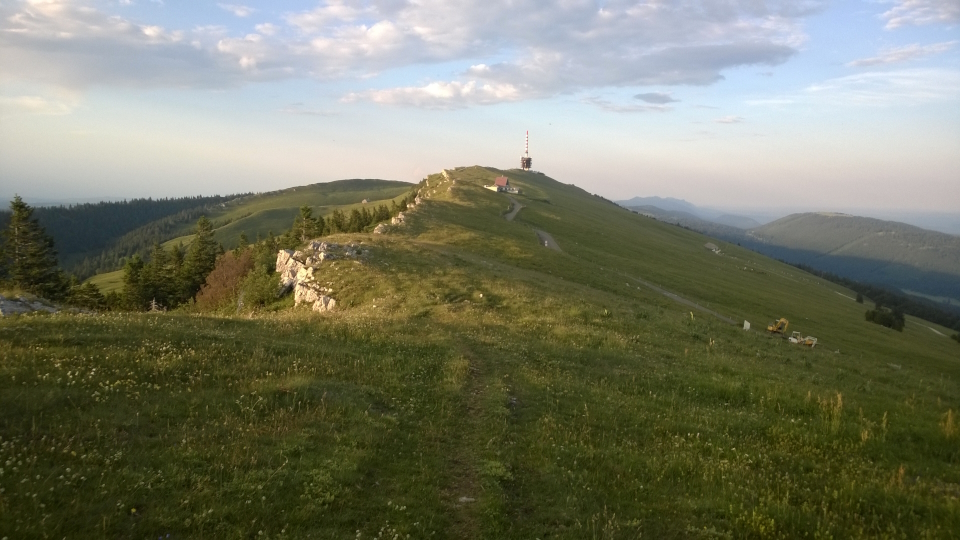
At this half-way point in the Jura Crest Trail (8 stages done and 8 to do), Alpine Exploratory groups take a rest day, and we suggest Neuchâtel for this.
Stage 9: Vue des Alpes to Noiraigue
(22.1km and 620m ascent)
From Vue des Alpes, which is a crossing point of a low col, above La Chaux-de-Fonds, we strike off West across undulating ground until we reach our first summit, Mont Racine (1,439m). We finish the stage with a steady descent into the village of Noiraigue.
Stage 10: Noiraigue to La Combaz
(33km and 1,459m ascent)
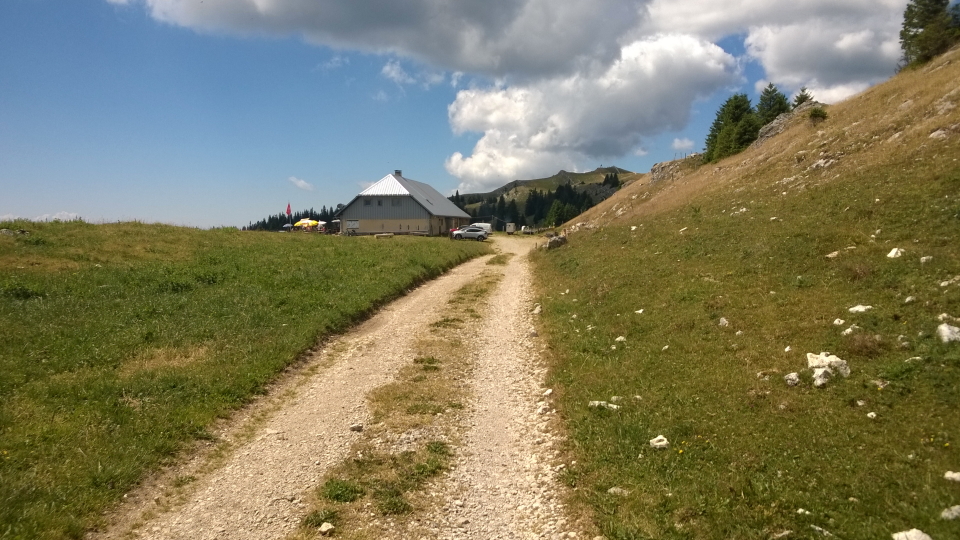
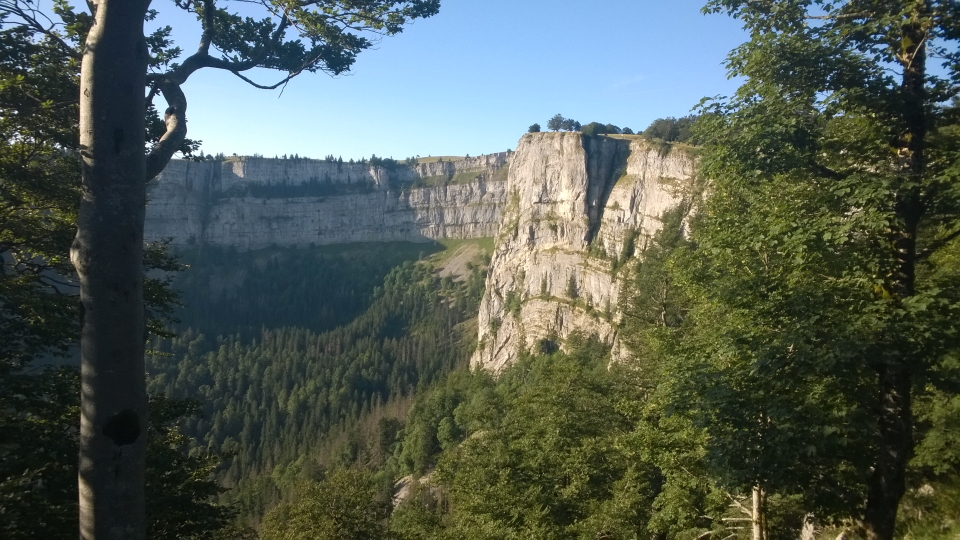
Le Soliat (1,464m) is our peak of the day, with wide views. These include views to Mont Blanc, appearing as a snowy peak. Today we come to the Creux du Van, known as the Swiss Grand Canyon.
Stage 11: La Combaz to Sainte-Croix
(14.5km and 565m ascent)
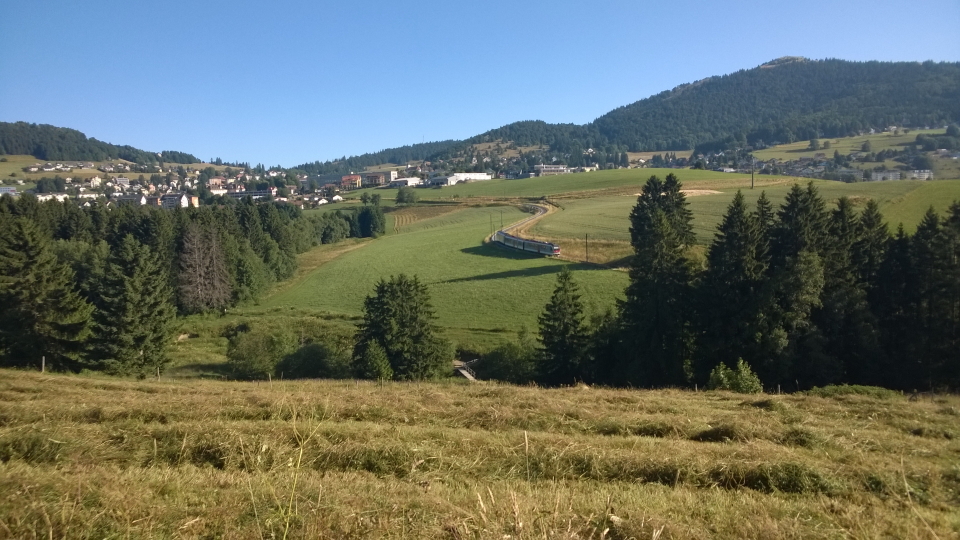
A rolling day without too much ascent on one go, today we start with 5km of up and down to La Cruchaude and then climb more seriously to Le Chasseron (1,608m) which is our peak of the day, marked by a metal triangular pillar as it common for summits in the Jura.
Stage 12: Sainte-Croix to Vallorbe
(23.6km and 873m ascent)
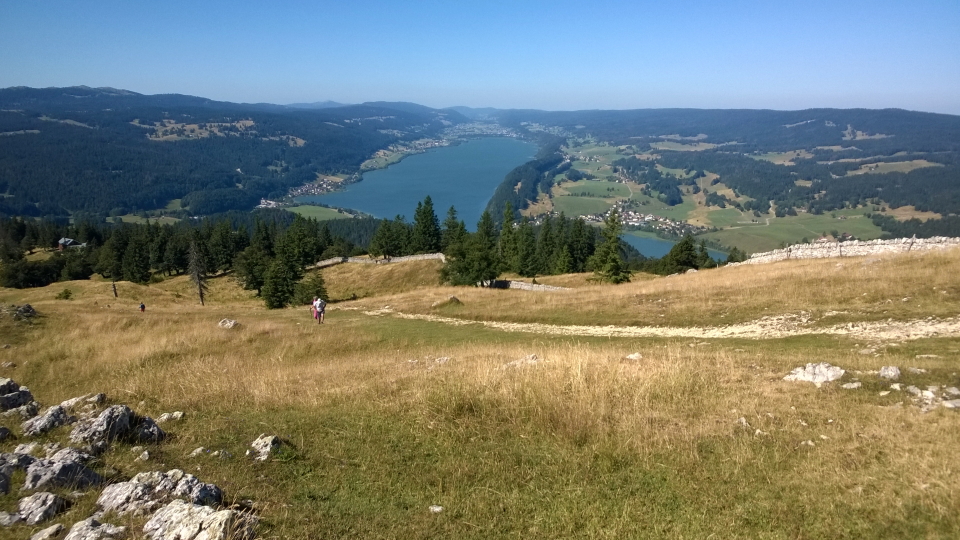
On the way to Vallorbe, a sizeable village, we pass nearby Le Suchet (1,588m) with its views.
Stage 13: Vallorbe to Le Pont
(13.4km and 802m ascent)
We leave Vallorbe and its handy shops and trains, to climb steadily. The high point of today's walk is the Dent de Vaulion (1,483m). There is a large, black, surveyor's triangle at the summit.
Stage 14: Le Pont to Col du Marchairuz
(24.1km and 1,001m ascent)
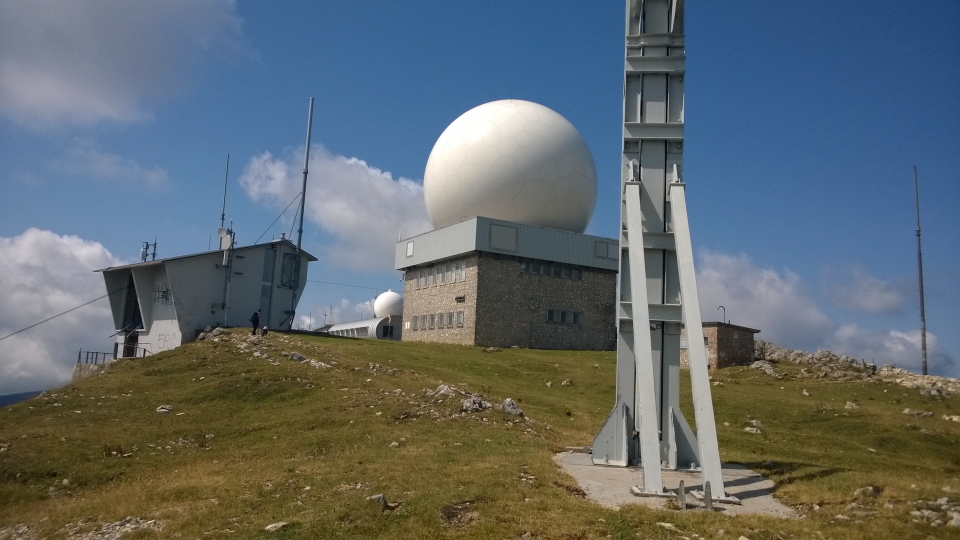
We reach Mont Tendre (1,679m) on today's stage. Looking back, we see the summits previously visited: Dent de Vaulion with its tall mast, and beyond that, a little to the Right, Le Chasseron. To the South, we are now a substantial way along Lake Geneva. Lac de Neuchâtel is a long way back. Looking ahead, the summit of La Dôle can be seen, the final summit of the Jura Crest Trail.
Stage 15: Col du Marchairuz to Saint-Cergue
(16.8km and 380m ascent)
Crêt de la Neuve (1,494m) is a minor peak quite soon after leaving Col du Marchairuz, where generally this stage is a relaxed and a downhill one, to reach the delightful villge of Saint-Cergue with its shops. We are within striking distance of Nyon!
Stage 16: Saint-Cergue to Nyon
(26km and 723m ascent)
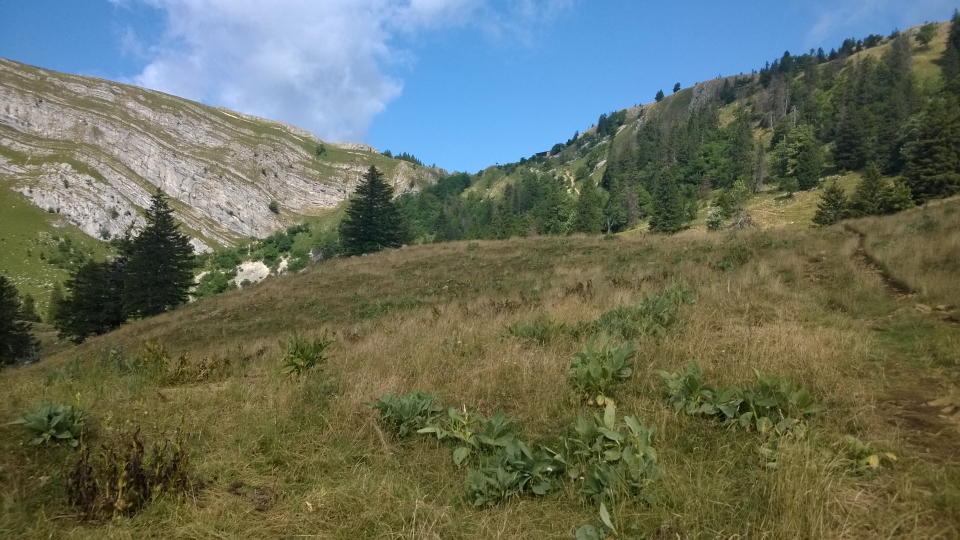
La Dôle (1,677m) is the peak on this last day, which we reach after 7km. From La Dôle it is almost all downhill into Nyon, heading South to Lac Leman. At Borex, with 6k to go, regular buses let us skip the last walk if we prefer.
Hike the Jura Crest Trail with Alpine Exploratory
Alpine Exploratory offers a self-guided hike on the full Jura Crest Trail (16 stages, 1 rest day and 18 nights). As well as the whole thing, we offer trips on East and West halves (8 stages and 9 nights each). We're also pleased to book shorter or longer sub-sections of the route according to your available dates. Please contact us to discuss options.
Jura Crest Trail
Jura Crest Trail: East
Jura Crest Trail: West
Our self-guided holidays give you what you need to complete the route under your own steam. We book your accommodation in a mix of huts and hotels and we give you our detailed Routecards, the local maps, and lots of notes. Importantly we will advise on the ideal schedule and accommodation to suit your approach to the Jura Crest Trail.
Please ask us any time for more details. Please feel free to describe your walking experience and preferences, and we'll suggest which trek you might enjoy most.
  Jura Crest Trail enquiry form
|



 Alpine Exploratory


