 02 8319 2266 from Australia
 416-628-3473 from Canada
 04 889 4515 from New Zealand
 646-757-1102 from the USA


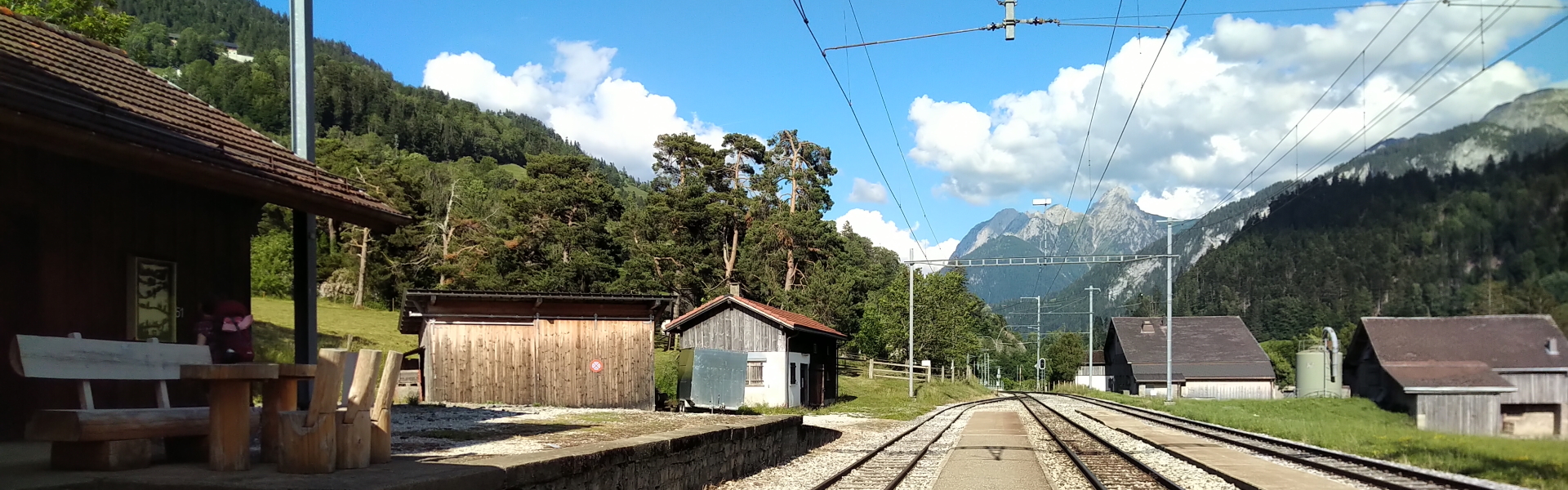
 Cross-European trips - the Alps
(for Les Houches)
(for Les Houches)
Now let's discuss a couple of these routes, that stand out for their possibilities.
Adlerweg ( Austria)
The Adlerweg crosses the Tyrol, in Austria, in two weeks. It's fairly solidly East to West. The easiest way to get to the start (St Johann-in-Tyrol) is to fly into Salzburg, we could say, as long as you find decent flights. The easiest way out from St Anton at the end is to continue along the train line to Zurich. Around these basics are many options, as we'll discuss.
To see more of Austria, or indeed Germany, before your start, fly into Munich and work your way down. The simplest train from Munich to St Johann goes via Kufstein, or Worgl, and changes for the smaller line to St Johann which is a stop beyond Kitzbuhel. By exploring further East from St Johann you would get first to Zell-am-See and then Salzburg, which is worth a night and has its fine castle above the town.
After the Adlerweg the natural line of the trail suggests that you continue your onward journey West, into Switzerland, and of course once at Zurich you are on the whole Swiss system. One option would be to head South from an earlier point in Switzerland, Landquart, to reach Chur which is on the main line and which is a centre for the fabulous Swiss trains in the South East. This is the area of the Engadine, of Davos and of St Moritz. Come home at the end through Zurich or, with a longer journey and a local airport bus at the end, Basel.
Via Alpina ( Switzerland)
On the Via Alpina, formerly the Alpine Pass Route, we cross Switzerland from East to West. In the course of doing this, we nip in and out of all sorts of Swiss villages and train systems, such that by the end of the three weeks - or any one week along the way - you might want to explore another country!
It is easy to reach Italy from the Via Alpina, and one way to do this would be to backtrack to Kandersteg (on the route) and take the train first to Brig and then to Milan. For France, Montreux at the end is well-placed and you might take the train first along the lake to Lausanne (lovely) or Geneva (less so) and branch into France. The French town of Annecy is popular but in our view is overrated. Paris itself is about 5 hours by train from Montreux through Basel and then Strasbourg.
Before your Via Alpina, arriving into Sargans, you might have planned to see Liechtenstein, that tiny country, but even without plans you can see it by bus and back from Sargans. Thinking further back, you could reach Sargans from points in Austria, where trains extend all the way from Vienna, Salzburg and Innsbruck.
These are only two trips, of the many, and please email us if you would like to chat about other travel ideas.
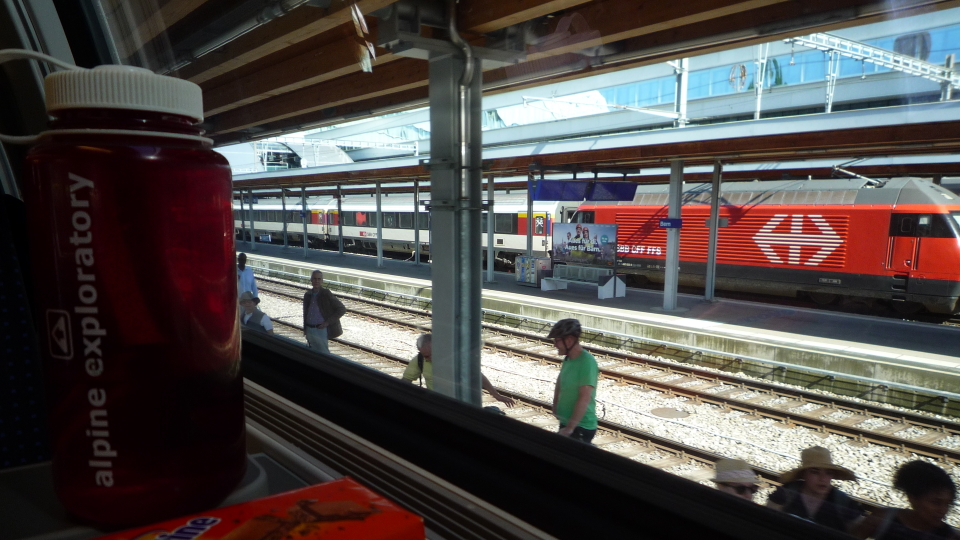 Cross-European trips - Scandinavia
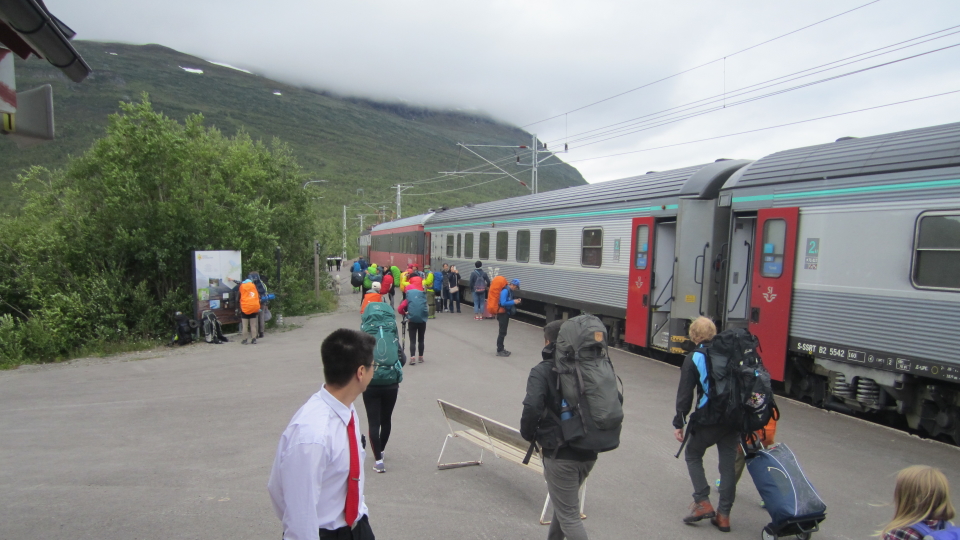 Cross-European trips - the UK and Ireland
Let's look in detail at two of these trips.
Lake District Tour ( England)
Any trip to the Lake District can be combined with adventures North or South. A standard approach would be from Manchester, on the train to Windermere and then the bus to Ambleside. That bus continues through the Lakes to Keswick at the Northern end. The train, starting in Lancaster, makes a loop of the lakes, around the peninsulas and regions that complete the picture that the Lake District Tour, a tighter loop, doesn't reach. We're thinking of places like Arnside, Ravenglass, Workington and Whitehaven.
Thinking further afield, from Ambleside you reach Windermere by bus, and then from Windermere you reach Oxenholme on the train, and once at Oxenholme you are on the main line. Trains go up to Edinburgh and Glasgow, or down to Manchester and London.
West Highland Way ( Scotland)
The West Highland Way could be made part of a fine exploration of Scotland. Start with the obvious place, Glasgow, which is a short train ride from its suburb Milngavie where the West Highland Way starts. Glasgow has plenty to see, spread as it is over the city centre and also the fabulous West End with Kelvingrove park. Treating Edinburgh as your start point would give you another slice of life and would be an easy trip to Glasgow by frequent train. The two cities are very different. Indeed, Edinburgh could be seen on the way to the West Highland Way, with regular trains direct from Edinburgh station (Waverley) to Milngavie.
On finishing the WHW in Fort William, the whole of the Highlands is spread out before you. Buses go North West to Skye, and ferries to the Outer Hebrides from Uig. Or, buses go straight up past Loch Ness to Inverness, a journey of about an hour and a half.
Perhaps the finest way back from Fort William is the romantic West Highland Line, through much of the Highlands and over Rannoch Moor, ending 4 hours later in Glasgow. One of the great rail journeys, surely of the world, this train follows some of the WHW and spends some time passing through other areas, so it's a good chance to reflect on your accomplishment.
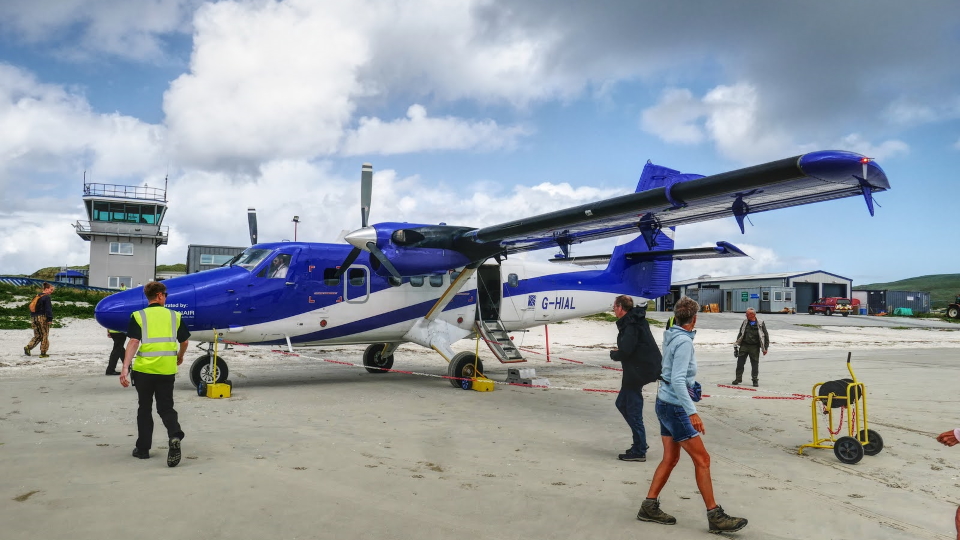
Thoughts about these pan-European trips
The pleasures
Europe is, on the whole, phenomenally well connected. Europe is overlaid with a dense grid of trains and buses. With one extra day in your travel, you can really cover the ground.
European trains compared to American trains
Trains all over Europe often come as a shock to American visitors. Trains in America can be great, and the train network in the USA is broad, as in it covers the ground, but it would be harder to describe it as extensive, or as intricate. If a traveller is in, say, Raleigh, North Carolina, there is one train a day in each direction. Some points have two trains a day, but still might be at odd times of day. There are trains, but they are less useful for hopping on and off. In some places, for example Harrisburg, Pennsylvania, there are multiple trains a day, in this case to Philadephia. Such cases of commuter lines tend to be in the bigger urban centres.
By contrast, the general pattern across Europe is that if there is a 10:14am train then there is also a 9:14am train and also an 11:14am, and so throughout the day until perhaps the frequency declines in late evening. (There are exceptions to this, as we'll note below.) Countries that are particularly on the ball with their trains, offering a dense grid and hourly-plus services everywhere, are - we would say - the Netherlands, Switzerland and Austria. Locally, for example along the South Coast of France around Nice, the trains are roughly hourly too, and there are examples of this everywhere.
Norway and Sweden are countries whose huge distances and relatively low population outside the cities make things more like America, or really more like Norway and Sweden as opposed to like the Alpine countries - the Continental European countries. What surprised us coming from the UK is that Norwegian trains decline new riders once they are full. In the UK we just cram them on. We'd say that it's essential to book trains, within Norway, to ensure that your plans work out.
Decide what to do based on what you enjoy
If you like to be on the move, and to be seeing new things all the time, and to be slightly rushed rather than slightly under-rushed, then you could reckon 8+ hours on the move, for example, and connect far-apart places such as Klagenfurt and Zurich. Change trains at Munich on the way. We've just returned from Marseilles to Edinburgh within the day, which included 3 hours on a French train, then a walk across Paris for an hour and a half, then the Eurostar, and then 4 hours on a British train.
Equally, if you like to stay in an area and get to know it, to never be too far from your next accommodation, then it would be easy to book an hour's train journey or so, to see the local area. An example could be leaving Wengen to get to Interlaken, even on the way to Bern. `
Please ask us for hints based on the approach you favour, and we'll be glad to help. Thank you.
 Travel - our main page for these travel aspects
Guided and self-guided holidays - see our full range

Alpine Exploratory
Alpine Exploratory is a system of knowledge on the best mountain trekking in our areas, giving clients superb holidays based on this exploration.
About us


 HOLIDAYS
Hike with us in the Alps, Scandinavia, the UK or Ireland. Go self-guided or guided.
 Schedule 2027 Holidays: Alps Holidays: Scandinavia Holidays: UK and Ireland Holidays: Guided
 EXPLORE
We research and interpret the trail to give you the finest walking holiday.
Walking guides Travel Articles About our holidays (FAQs) Photos from trips Recces Responsible travel Equipment Walking grades ABOUT USAlpine Exploratory is a system of knowledge on the best mountain trekking.
About us People The Exploratory System In the pipeline History Join our team AE Store Privacy Policy Terms and Conditions Contact us
 Alpine Exploratory
34 Rose Street North Lane
Edinburgh
EH2 2NP
United Kingdom
 info@alpineexploratory.com
 +44 (0)131 214 1144 Contact us Calendar
 Facebook
 Instagram
Booking